


Should you use ankle weights for karate kicks?
My honest answer, yes, it's a game changer. Added resistance can make karate training harder in a useful way, and I'm all for that. But in karate, where the weight sits matters more than how much it weighs. An ankle weight puts the load at the very end of your leg, which is the exact part that snaps out and has to be stopped on every kick. That's extra work for your knee, and it quietly changes the kick you're trying to build.
At Barbelt Warriors Academy in Raleigh, we train in distributed micro-weighted gear from KILOGEAR, and we're bringing it into our dojo. Here's why we made the switch, how we use it in class, and how we adjust it for students from our youngest competitors to adults who found karate later in life.
Why karateka reach for ankle weights
The instinct makes sense. Karate is built on repetition. Hundreds of mae geri, mawashi geri, and yoko geri every week. The logic goes like this: train with a heavier leg, and your leg will feel lighter and faster when the weight comes off. Plenty of senseis grew up training that way, and you'll still see ankle weights in dojos today.
The problem: a kick is a whip, and the weight sits on the tip
Think about what a good Shotokan kick actually is. You chamber the knee, extend the lower leg fast, then snap it back just as fast. That pull-back, hikiashi, is half the kick. The foot is the tip of the whip. It moves the fastest, and it's the part your knee and hamstrings have to stop and reverse.
Now strap a pound or two to that tip. You've added mass at the farthest point from your hip, the worst spot on a lever. Every rep, your knee takes more load at full extension, and your hamstrings work harder to brake the leg and pull it back. A pound feels small in your hand. At the end of a fast-moving leg, it isn't small. (If you want the full breakdown, here's why ankle weights hurt your knees.)
Then there's technique. Even in walking, a far slower movement, research on ankle weights shows they change how people move, and both Harvard Health and WebMD caution about the strain they put on joints. In karate, that drift shows up as a dropped chamber, a hip that swings to compensate, and a retraction that gets lazy. Do that for a few hundred reps and you've practiced the wrong kick. In karate, you become what you repeat.
"A snapping kick is one of the fastest things the leg does. Adding mass at the ankle puts it at the end of a long lever, and the knee and hamstrings pay for it every time the leg has to stop and reverse. If you want resistance in kicking drills, keep it on the muscle and close to the hip."
Dr. Aaron Willis, DPT

Why we train in KILOGEAR instead
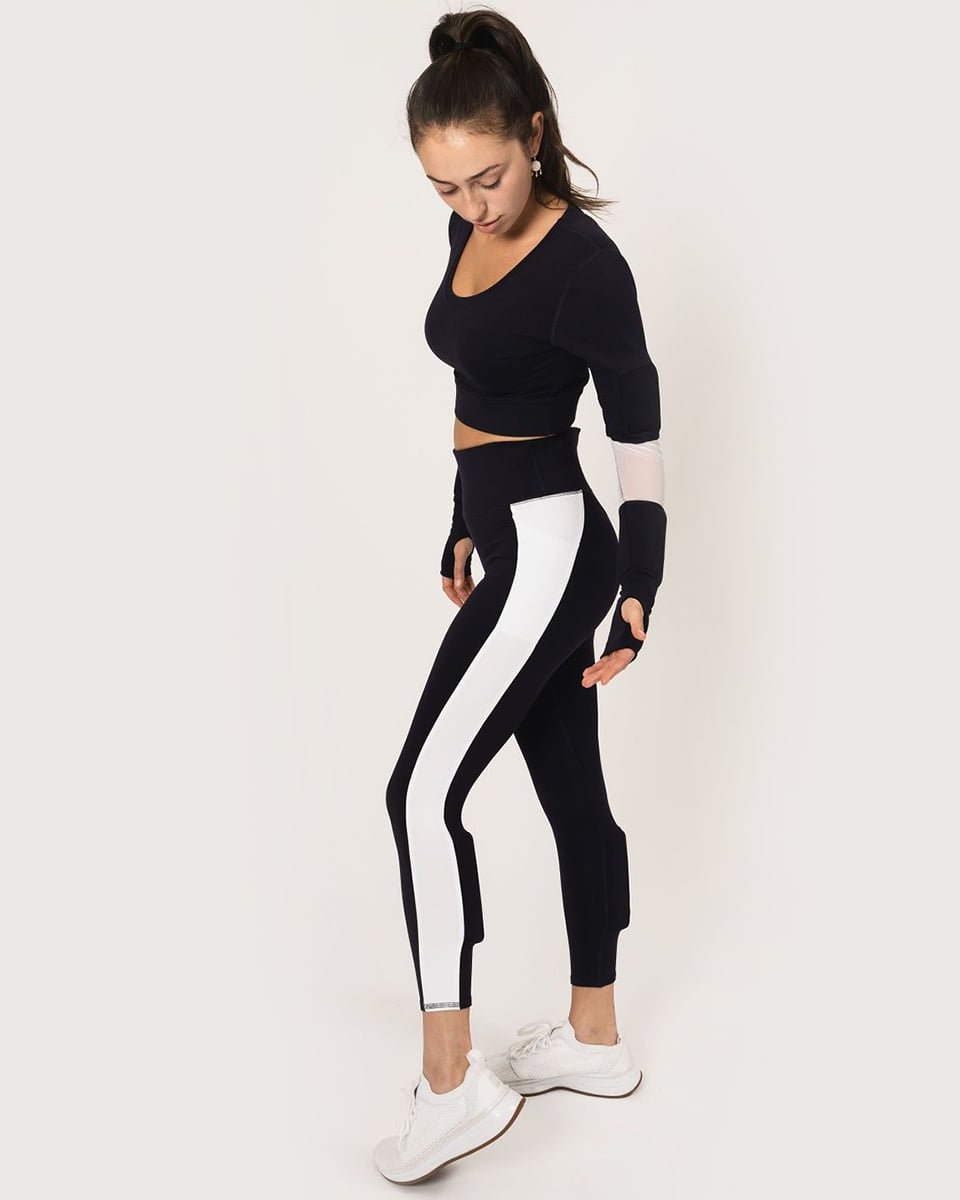
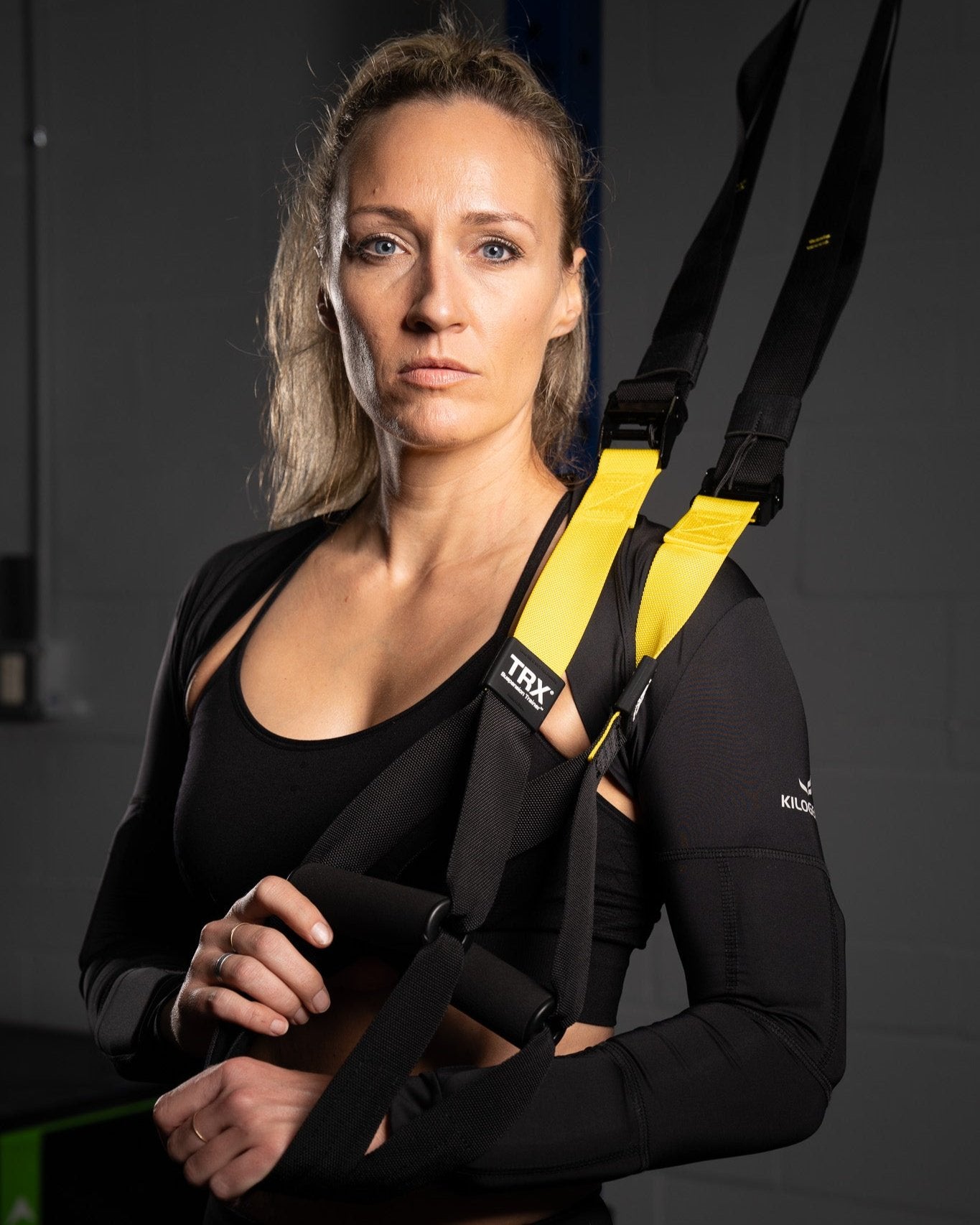
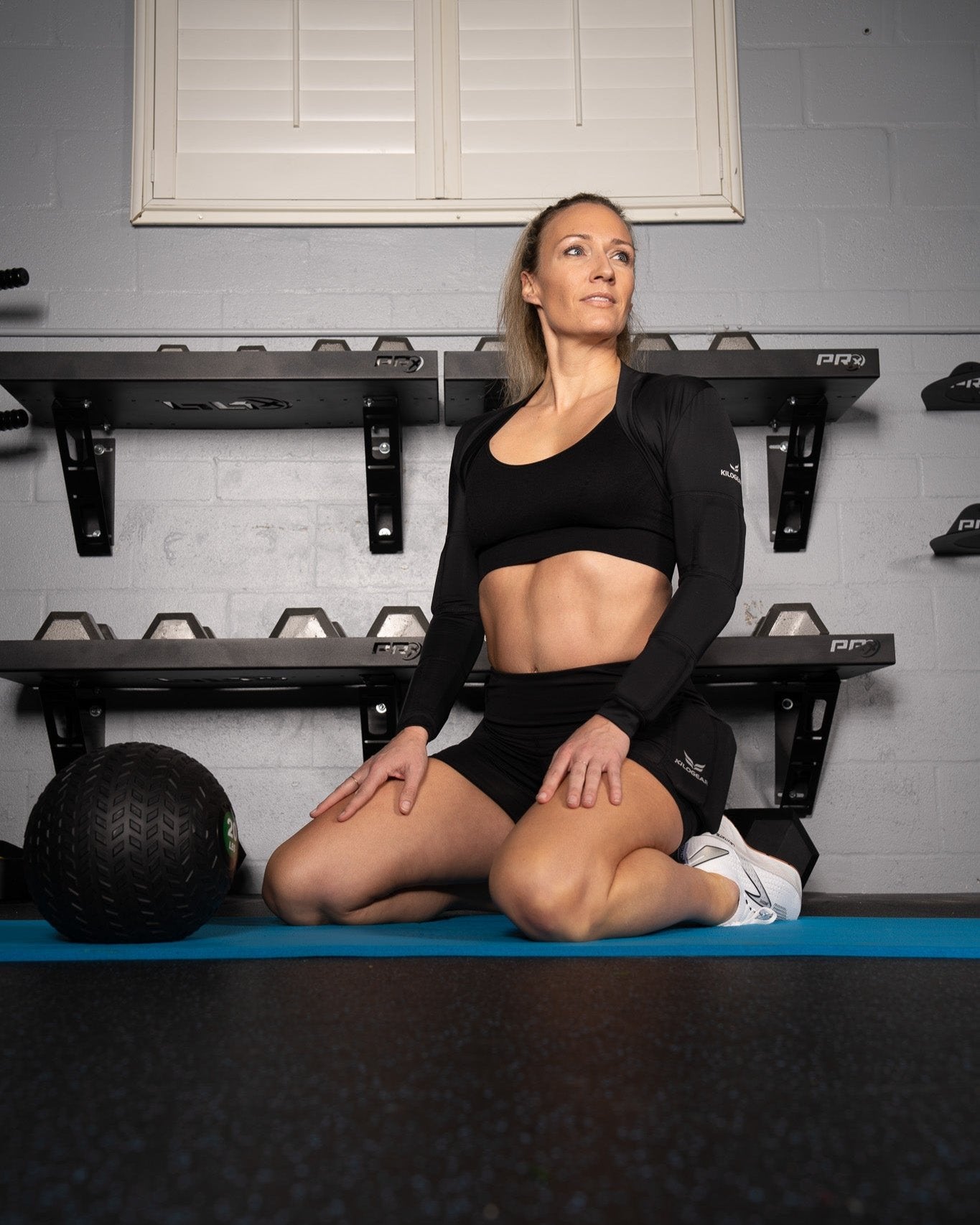
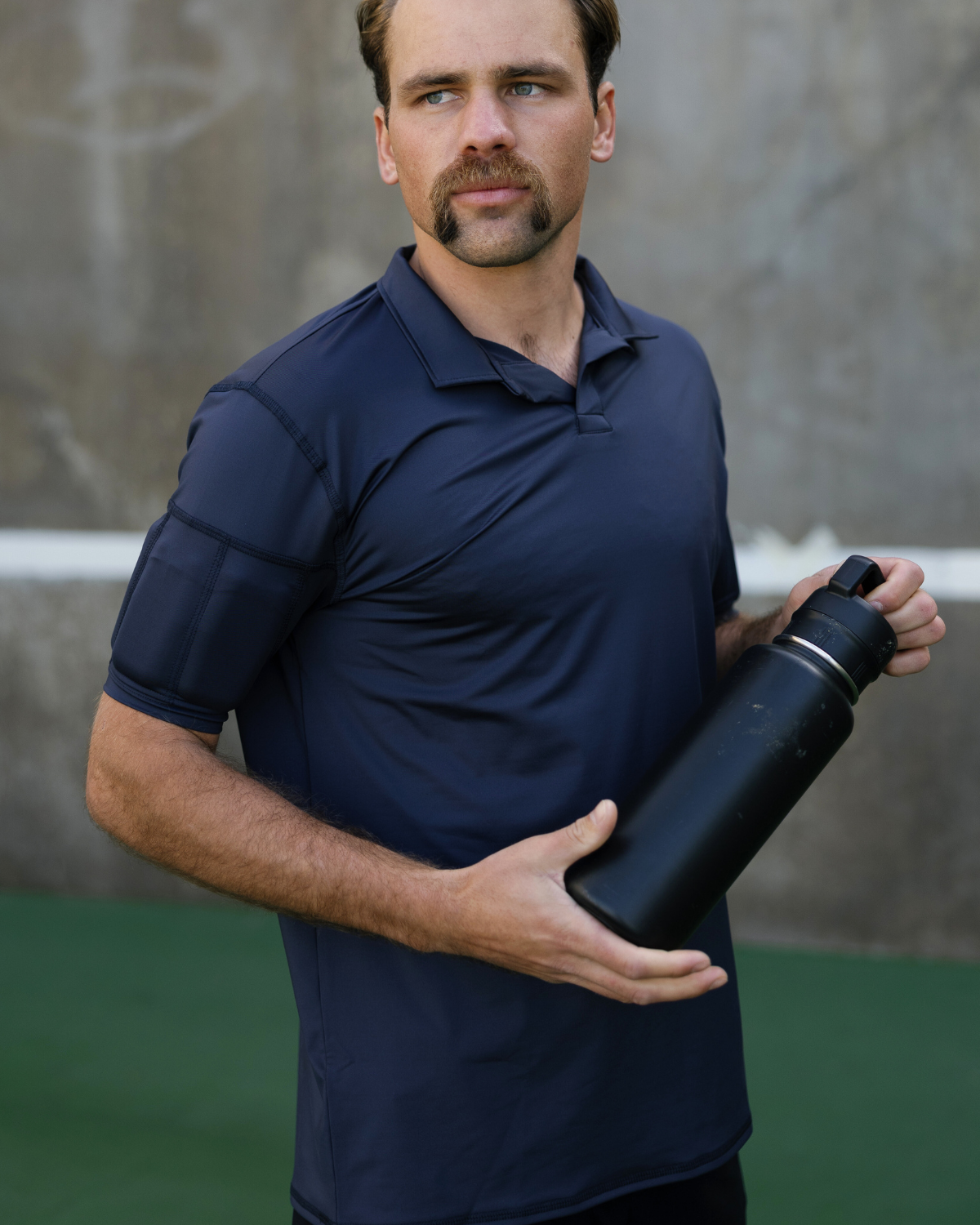
What we wanted was simple: resistance that makes the muscles work harder without changing the technique. That's what distributed micro-weighting does. KILOGEAR puts small removable weights, a quarter pound or a half pound each, into pockets built into compression apparel. Instead of one heavy weight at one joint, the load is spread across the muscles: thighs and hips, calves, upper arms. It sits close to the body, so a kick still moves like a kick.
Four things made it work for a dojo:
- It stays put. Ankle weights slide during kicks and turns. Compression gear with fixed pockets keeps the load where it belongs through kicks, stance changes, and every turn in a kata.
- It's adjustable. Weights go in and come out, so the same garment works at a light load for a beginner and a heavier load as they progress.
- It's modular. The same weights move between shorts, calf sleeves, and arm bands. One set of weights covers different drills.
- It's washable. Pull the weights, and the gear goes in the washer and dryer. Anyone who's been in a dojo in August knows why that matters.
It's doctor-designed and athlete-validated, and the modular weight system is patented. That mattered to me before I put it on my students.
How we use it at Barbelt Warriors Academy
Kihon (basics)
Kicks and punches in lines, slow first, then at speed. For kicks, we keep the load on the thighs and hips with the KILOGEAR weighted PRO shorts. For punches, PRO Arm Bands on the upper arm make both the strike and the hikite pull work harder, without hanging weight on the wrist.

Kata
This is where it earns its place. We'll run a kata several times in a row wearing the gear. Stances start to break late in the set, and that's exactly what we want to see and fix. Strong stances when you're tired is the whole point of kata. The gear always comes off for grading and competition runs.
Stances and footwork
For stance transitions and kumite footwork drills (stepping, shifting, closing distance), calf sleeves add work to the lower legs while students stay light on their feet.
Full-speed kicking drills
When kicks go full speed, we keep the added load above the knee. That's our rule, and it's the same logic that keeps ankle weights out of our training.
Kumite (sparring)
No. Weighted gear doesn't belong in sparring or any partner drill with contact. It's not the right tool there, and I'd rather say that plainly.
Young and old: how we adjust by age
Our students range from little kids to adults, and one reason we like this system is that it scales. The rules change by age.
Kids and teens
Strength work for kids used to be frowned on. That's changed. The American Academy of Pediatrics' clinical report on youth resistance training supports it for kids and teens when supervision and good technique come first. That's exactly how we run it:
- Everyone starts at the lightest load, for one short part of class.
- An instructor watches every rep. If technique breaks, the weight comes off.
- Technique always comes before load.
Adults and older students
Plenty of people start karate in their 40s, 50s, and beyond, and they're some of our most dedicated students. For them, protecting the joints matters even more. Harvard Health notes that wearable weights can help with strength and bone health, but can also cause problems if they're used the wrong way. Keeping the load on the muscle, close to the body, lets adult students add resistance to movements they already know, without strapping extra weight to a knee, wrist, or ankle. The Core Arm Bands, and calf sleeves are where most adults start.
How to start safely
1. Start light. Begin with half the recommended load. With arm bands, that's half a pound per arm.
2. Start short. Wear it for one part of class, like kihon or a kata set, not the whole session.
3. Watch the technique. If your stance, chamber, or retraction breaks down, the weight is too much. Take it off.
If you have a knee, hip, back, or shoulder issue, or you're coming back from an injury, talk to your doctor or physical therapist before adding any load.
The bottom line
The real question isn't whether you should add weight to your karate training. It's where that weight should sit.
- Ankle weights put load on the tip of the leg, exactly where a snapping kick needs to stop.
- Distributed weight on the muscle adds resistance and keeps the technique intact.
- Use it for kihon, kata, stances, and footwork. Keep it out of sparring, grading, and tournaments.
- Scale it by age: light and supervised for kids, joint-conscious for adults.
Want to train the way we do? Visit the KILOGEAR Karate landing page for more information and the best gear.
Karate weighted training FAQ
Are ankle weights good for karate kicks?
For fast kicking, no. An ankle weight adds mass at the very end of the leg, so the knee and hamstrings absorb more load every time a snapping kick stops and pulls back. It can also change your chamber and retraction, and repeating a changed kick trains the wrong technique. Ankle weights have a place in slow, controlled strength work like leg raises. For kicking drills, keep added resistance on the thighs and hips, close to the body.
Does training with weights make your kicks faster?
There's no controlled research showing that training with added weight makes karate kicks faster, and I'm not going to promise that. What added resistance does is make the muscles work harder through the same movement. We use it to build strength and endurance inside good technique, and we judge it by one thing: how well the technique holds up late in class, when students are tired.
Is weighted training safe for kids in karate?
The American Academy of Pediatrics supports resistance training for kids and teens with proper supervision and technique. In our dojo, that means the lightest load, short periods, an instructor watching every rep, and no weighted gear for our youngest pre-karate students. Weight is never the goal for kids. Technique is. The gear comes off the moment form breaks down.
How much weight should I use for karate training?
Less than you think. KILOGEAR weights are a quarter pound or a half pound each, spread across the muscles. Start at half the recommended load for each garment, which for arm bands is half a pound per arm, and stay there until your technique looks the same with and without the gear. Then add weight slowly. More weight isn't better if the kick changes.
Can you wear weighted gear during kata?
For practice, yes. Running a kata several times in a row with added load shows you where your stances break down when you're tired, which is exactly what you need to fix. Keep it to practice. Take the gear off for grading, competition, and any run where your kata is being judged.
Can you spar in weighted apparel?
No. Weighted gear doesn't belong in kumite or any partner drill with contact. Sparring needs full, natural movement and proper protective equipment, and added weight brings nothing useful there. Use weighted apparel for solo and line work: kihon, kata, stances, and footwork.
Is karate good for adults over 50?
Yes. Karate is a lifelong art, and many adults start in their 40s, 50s, or later. It trains balance, coordination, strength, and focus in a single practice. Older students may need adjusted stances, more recovery time, and a careful approach to added load. If you have joint or health concerns, check with your doctor first, and look for an instructor who adapts training to you.
Can you wash weighted training clothes?
KILOGEAR's weights are removable, so yes. Pull the weights out of the pockets, then wash and dry the apparel like any other activewear. Traditional ankle weights and weighted vests generally can't go in the washing machine.