


Full disclosure: I serve as an advisor to KILOGEAR. I have reviewed their third-party testing and the science convinced me. I firmly believe in the approach. The first question my patients ask me is a practical one. How much weight should I wear, and what do I put on to get there? Let me answer that first, then explain why it works.
How Much Weight Should You Wear? Aim for 3 to 4% of Body Weight
Your target sits at roughly 3 to 4 percent of your body weight. Find your weight, and this is the range to aim for.
| Your body weight | Target KILOGEAR load |
|---|---|
| 110 to 145 lb | 3.25 to 5.75 lb |
| 145 to 187 lb | 4.25 to 7.5 lb |
| 187 to 231 lb | 5.5 to 9 lb |
Customers above 231 lb are still covered. A calf-anchored limb build reaches the 3 to 4 percent target well past that weight, and an optional vest can add further total load if desired.
What to Wear to Hit Your Target Load
The simplest way in is the Calf Sleeves, a 3 pound anchor on the calf. From there you add pieces to reach your target. Here is what that looks like for women and for men. Every build keeps the calf anchor and spreads the rest across the limbs. You do not need every piece, just enough to reach your target.

| Target load | Women's build | Men's build |
|---|---|---|
| 3 lb, base | Calf Sleeves (3 lb) | Calf Sleeves (3 lb) |
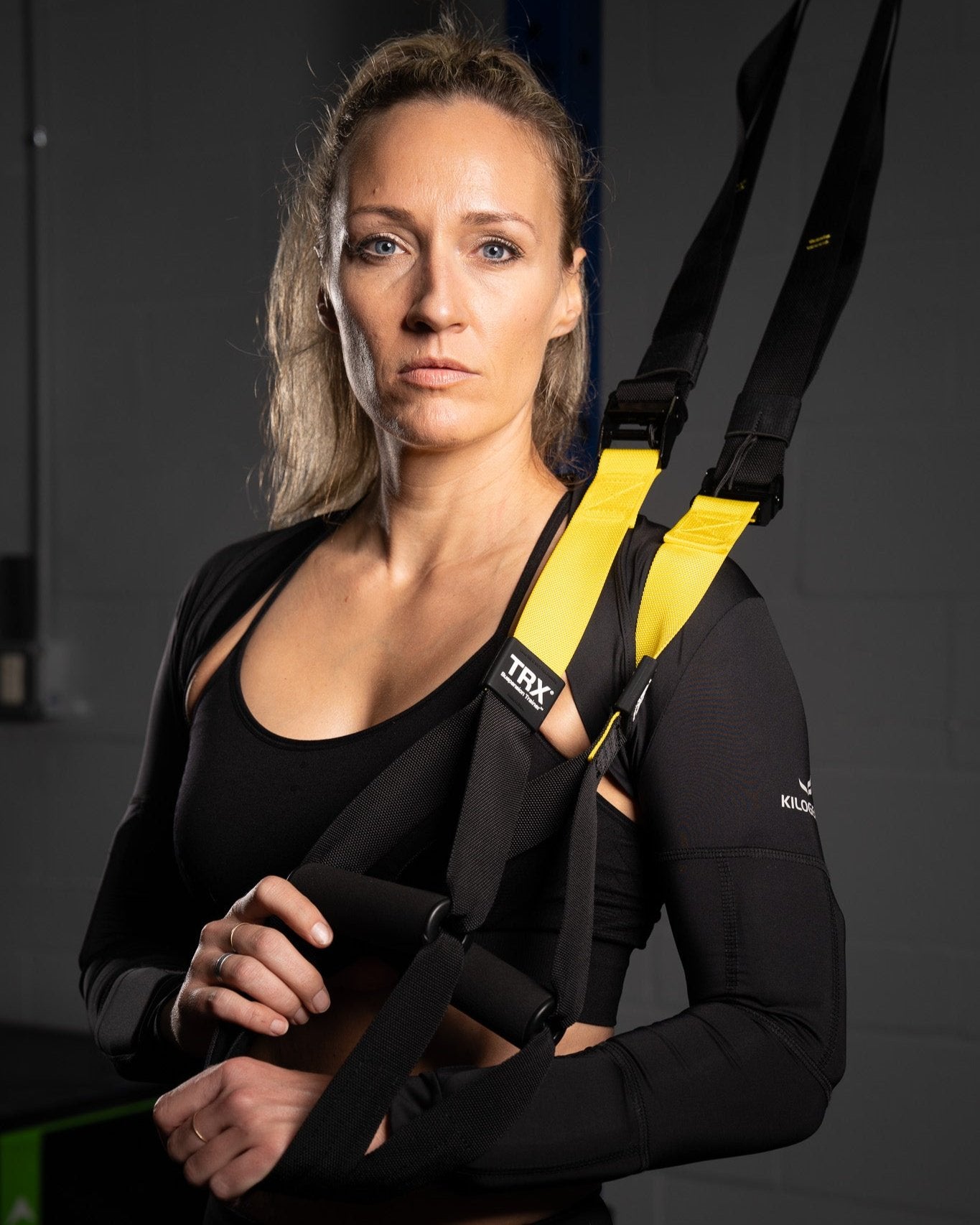
| About 5 lb | Calf Sleeves (3 lb) + Forearm Bands (2 lb) | Calf Sleeves (3 lb) + Forearm Bands (2 lb) |
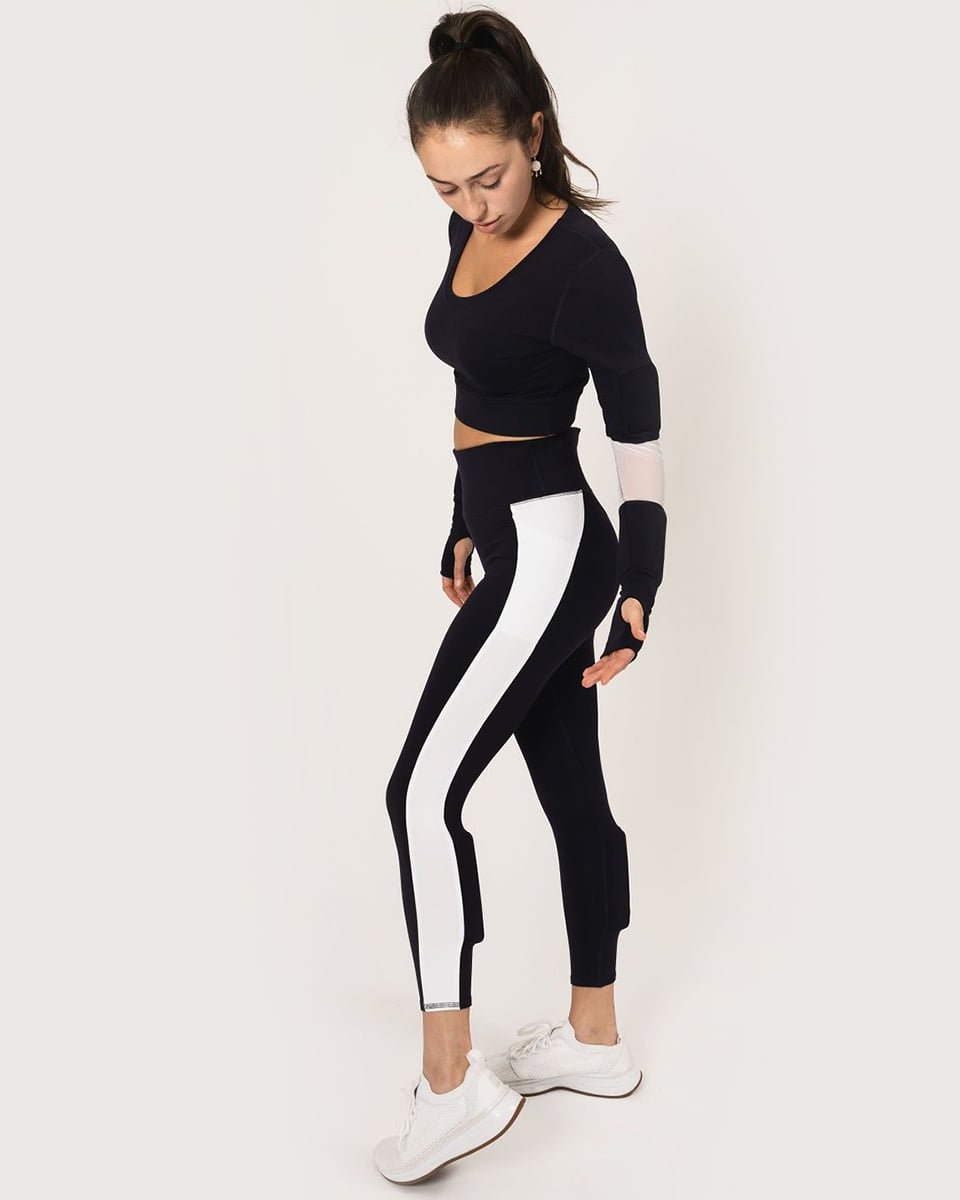
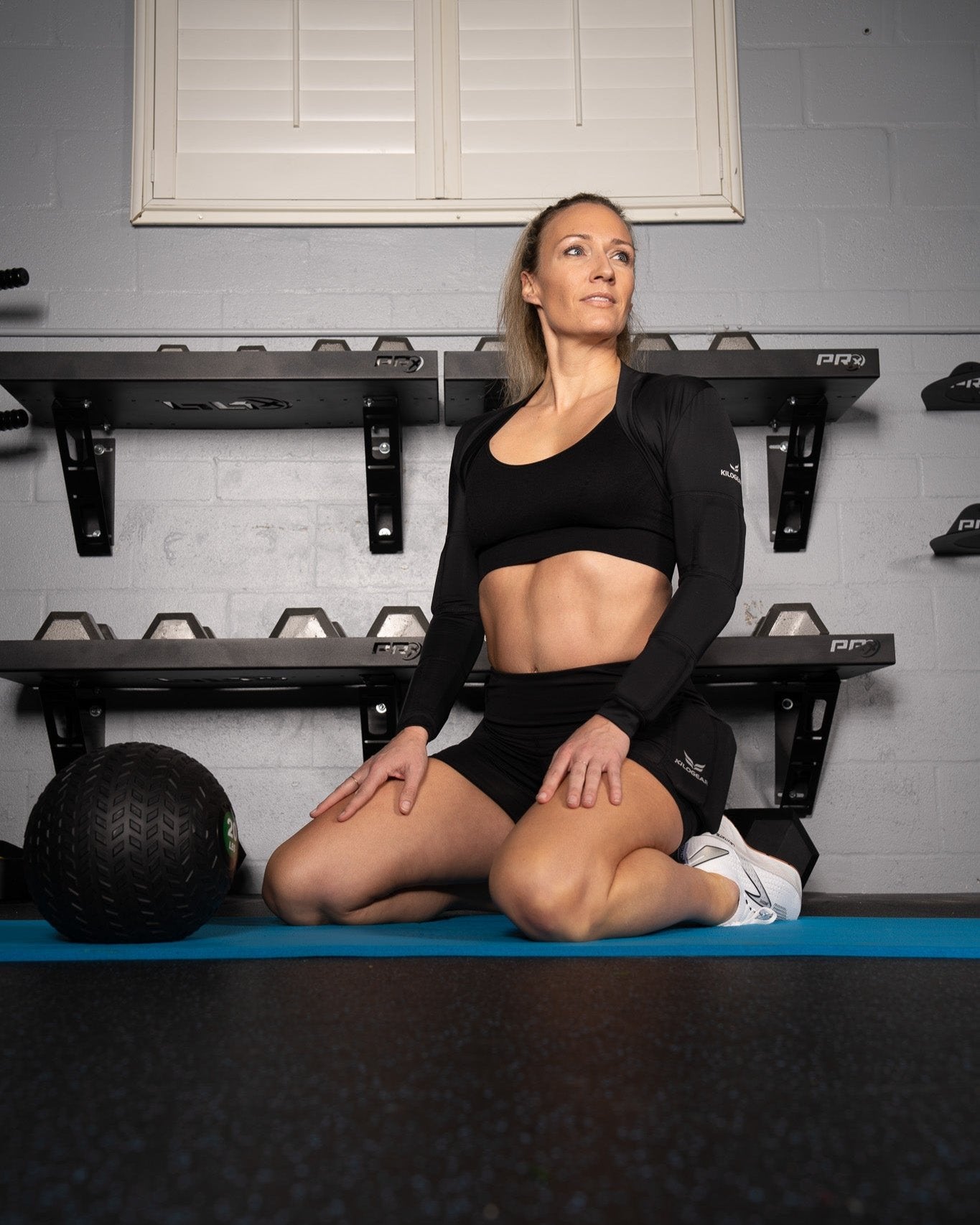
| About 7 lb | Calf Sleeves (3 lb) + AURA Core Short (2 lb) + Forearm Bands (2 lb) | APEX Pro Short (4 lb) + Calf Sleeves (3 lb) |
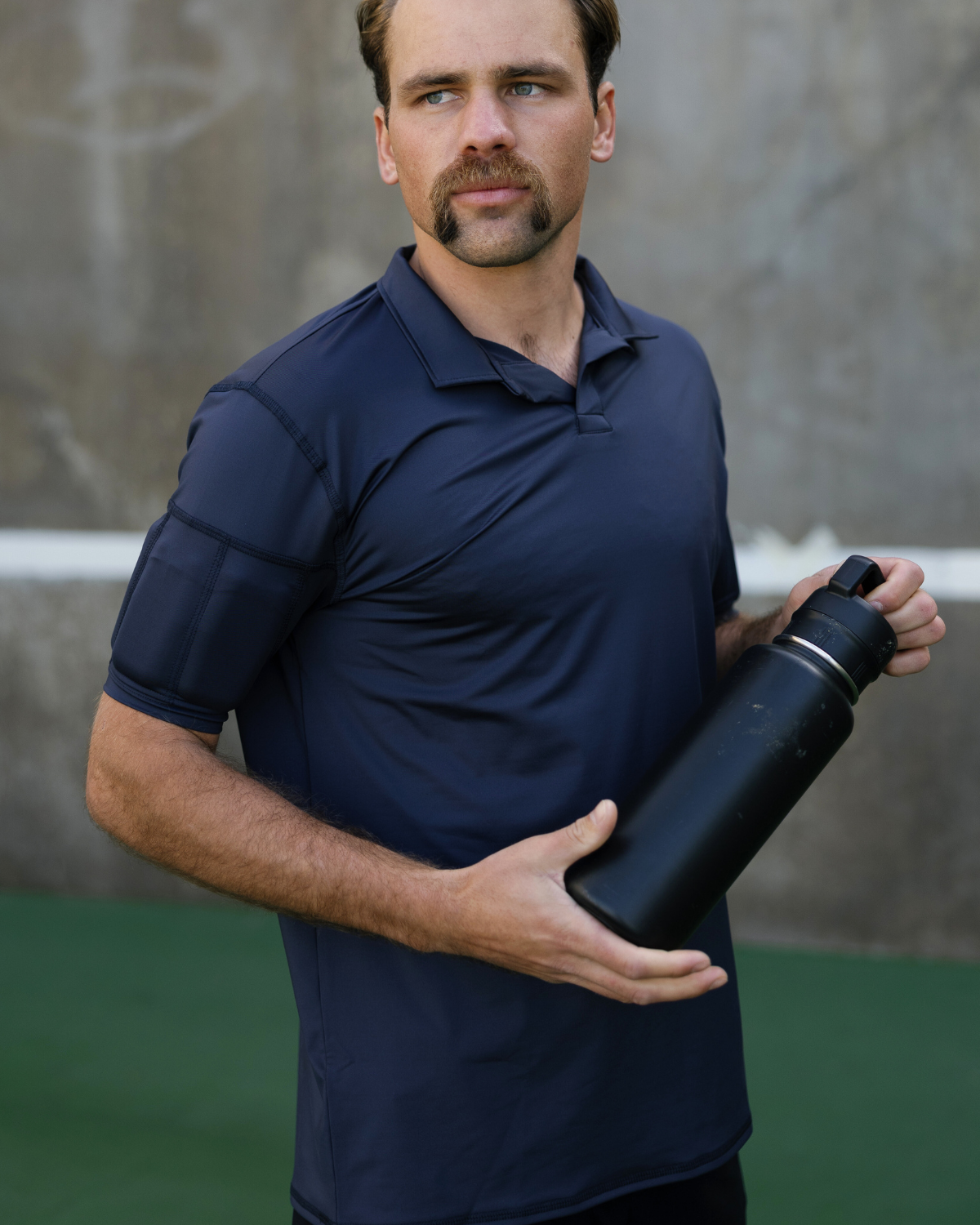
| About 8 to 9 lb | Calf Sleeves (3 lb) + AURA Core Short (2 lb) + Forearm Bands (2 lb) plus AURA Pro Tee (1 lb) | APEX Pro Short (4 lb) + Calf Sleeves (3 lb) + APEX Pro Tee (1.5 lb) |
| About 10.5 lb |
APEX Pro Short (4 lb) + Calf Sleeves (3 lb) + Forearm Bands (2 lb) + APEX Pro Tee (1.5 lb) |
Women can use the AURA Booty Lift Legging (2 to 3 lb) as the calf anchor in place of the Calf Sleeves. Do not wear both, and do not pair the legging with the shorts. Match your build to your target from the first table, and if you are new to it, start light and ease up over your first few sessions.
An optional vest can be added on top of any limb build if you want more total load. The vest sits on the torso and adds overall workload, but it does not carry the specific calorie and Peak VO2 figures, which come from the calf-anchored limb loading. Use the limb pieces to hit the target in the table above; add the vest only as extra total load.
Why a Few Pounds Does So Much: Placement, Not Just Poundage
This is the part most people miss. It is where the weight sits, not how heavy it is. Weight placed on the moving parts of your legs and arms has to be sped up and slowed down with every stride. The cost of moving a limb rises sharply the farther out along that limb the weight sits, the same way weight at the end of a pendulum is harder to swing than weight near the pivot. That is rotational inertia. It is why a small, well-placed load can raise the effort of an ordinary walk more than the number on the tag would suggest.

And this is not a new or fringe idea. Decades of peer-reviewed work point the same direction. US Army researchers measured that a load carried on the feet costs far more energy than the same load carried at the torso (Soule and Goldman, 1969). Later laboratory studies found that adding weight at the shank raised the metabolic cost of walking (Browning and colleagues, 2007), and a 2019 study of calf-positioned resistance in trained runners found that oxygen use and heart rate rose as lower-leg load increased (Field and colleagues). A 2017 systematic review of 32 studies concluded that limb-positioned load creates an activity-specific overload (Macadam and colleagues). The consistent message is directional: put a modest load on the moving limb, and the same activity asks more of your body.
How Big a Difference Does Wearing Weight Make?
The outside research tells us which way the effect goes. To see how large it can be, KILOGEAR ran its own matched-condition treadmill testing, where each participant did the same walk and jog twice, once without the gear and once with it, serving as their own comparison. In that testing, the strongest responders reached calorie burn up to 35 percent higher across a session, up to 26 percent at a walking pace, Peak VO2 up to 47 percent higher, and reached their training intensity up to 74 percent faster, all during the same activity. Two honest notes. Those figures describe the strongest responders, not a typical result, and they come from KILOGEAR's own testing, not from the published studies above. The literature confirms the direction, and the company's testing measured the size. Based on acute single-session treadmill testing, individual results may vary.

How to Start Wearing Weight Safely
Ease in over your first several sessions so your body and your form adjust, the same as you would with any new training stimulus. Wear it during the walking, running, or conditioning you already do. And let me be clear about what it is and is not. It is a conditioning tool, a way to ask more of the same session. It is not a treatment for any condition. If you are managing an injury or a medical issue, talk with your own clinician before you add load.
The Bottom Line: How Much Weight, and What to Wear
I like tools that make ordinary movement do more without demanding more time. Used sensibly and built up gradually, wearable resistance is one of them. The science behind the direction is solid and decades deep, and the company's own testing shows the size of the effect it can produce. As always, match it to your own goals and your own body.
This article reflects my genuine professional opinion. It is not a substitute for individual medical or physical therapy advice.
Frequently Asked Questions
How much weight should I wear for walking or training?
Aim for about 3 to 4 percent of your body weight, which lands most people between roughly 3.25 and 9 pounds on the limb build depending on size. The goal isn't a fixed number, it's a range you build up to. Just as important as the amount is where it sits: spread across your moving limbs rather than piled on your torso.
Where should the weight go on my body?
Distributed across the parts of your body that move. Loading the calves and forearms gets accelerated and decelerated with every stride and arm swing, so it raises the effort of ordinary movement more than the same weight resting on your spine.
Why does a small amount of weight feel harder than it looks?
Because of rotational inertia. Weight at the end of a moving limb is harder to swing than weight near the joint, the same way weight at the end of a pendulum takes more effort to move. A few well-placed pounds can raise the effort of a normal walk more than the number on the label suggests.
How much weight is too much?
Chasing a bigger number is the wrong goal. Staying inside the 3 to 4 percent range keeps the load meaningful without changing your form. If the load changes or your movement feels off, that's the signal to take weight off, not add more.
Can I wash KILOGEAR weighted apparel?
Yes. The weights are removable, so once you take them out the apparel goes in the washer and dryer like any other activewear.
Do I need to buy every piece to reach my target load?
No. The system is modular. Start with a base like the 3 pound Calf Sleeves and add only the pieces you need. The same weights transfer between garments, so one weight investment covers several pieces.
Are the calorie burn and VO2 numbers typical results?
No. Those figures describe the strongest responders in single-session treadmill testing, not an average. They show how large the effect can be, not what everyone should expect. Individual results vary with pace, fitness, and load.
Is weighted apparel safe if I have an injury?
Weighted apparel is a conditioning tool, not a treatment for any medical condition. If you're managing an injury or health issue, talk with your own clinician before adding load, and ease in gradually over your first several sessions.