


Distributed micro-load lets you burn more calories on the same walk you already do.
You don't need to walk faster. You don't need to walk longer. You can burn more calories on the same loop you already walk, and the lever is added load. That's the honest answer to the question.
The complication is what kind of added load. Most people reach for ankle weights because they're cheap and obvious. They're also the option physical therapists warn against most often for walkers. Weighted backpacks and traditional vests work better for calorie burn, but they bring their own trade-offs: spinal compression, posture changes, and gear that won't go in the washing machine.
There's a better answer, and it's one most walkers haven't heard of yet. It's called distributed micro-weighted apparel, and it's the category KILOGEAR is building. Before we get to that, let's talk about why the obvious choices aren't great.
Why walkers reach for ankle weights (and why most therapists say don't)
The instinct is right. More resistance makes muscles work harder, which raises caloric demand. Research on load carriage during walking is consistent on this: adding mass to the body increases metabolic cost in a roughly linear way relative to load, and added load engages more muscle groups across the kinetic chain.
But where the load sits matters as much as how much it weighs. A 2007 study from the Journal of Applied Physiology found that distal leg loads (mass on the foot or shank) increase metabolic cost more per pound than proximal loads, but they also force the leg-swing muscles to work overtime in ways that change gait mechanics. A follow-up study found ankle mass can't even be modeled as a simple increase in body mass. The body responds to it differently.
That higher metabolic cost sounds like a feature until you look at what it costs you. Ankle weights have been shown to alter gait, increase joint loading at the knee and hip, and put concentrated stress on tendons not designed for distal loading during repetitive movement. WebMD's review of wearable weights flags ankle weights specifically for joint strain risk. For a brisk walk, that's a bad trade.
How much calorie burn does added load actually add?
Real numbers, not marketing math.
For a typical walker carrying 5 to 15 percent of body weight, studies and walking calorie calculators consistently show a 10 to 20 percent increase in calorie burn compared to walking the same route at the same pace without load. A walking calorie calculator built on peer-reviewed MET data puts it at roughly 5 to 7 percent more burn per 10 pounds added.
So if you currently burn 300 calories on a 60-minute walk, adding 8 to 12 pounds gets you to roughly 330 to 360. Useful, sustainable, repeatable. Not a 200 percent miracle.
Here's the part most walkers miss: that calorie bump assumes the load is positioned in a way your body can actually carry without breaking down. Concentrated load at one point (a single ankle, a single spine column, a single shoulder) adds calorie burn AND adds injury risk. Load spread across multiple muscle groups adds calorie burn without the same biomechanical penalty.

Ankle weights concentrate load at the worst point in the walking kinetic chain. Distributed apparel spreads it out.
What the doctors actually say
"When patients ask me about ankle weights for walking, I almost always steer them away. The kinetic chain wasn't designed for repetitive distal loading during gait. What we want is added resistance that respects the body's natural movement patterns, not something that forces the swing leg to compensate every step." - Dr. Aaron Willis, DPT
That's the shift. Added load is good. Added load concentrated at one joint is the problem.
The KILOGEAR solution: distributed micro-weighted apparel
This is the category we created because the existing options weren't good enough.
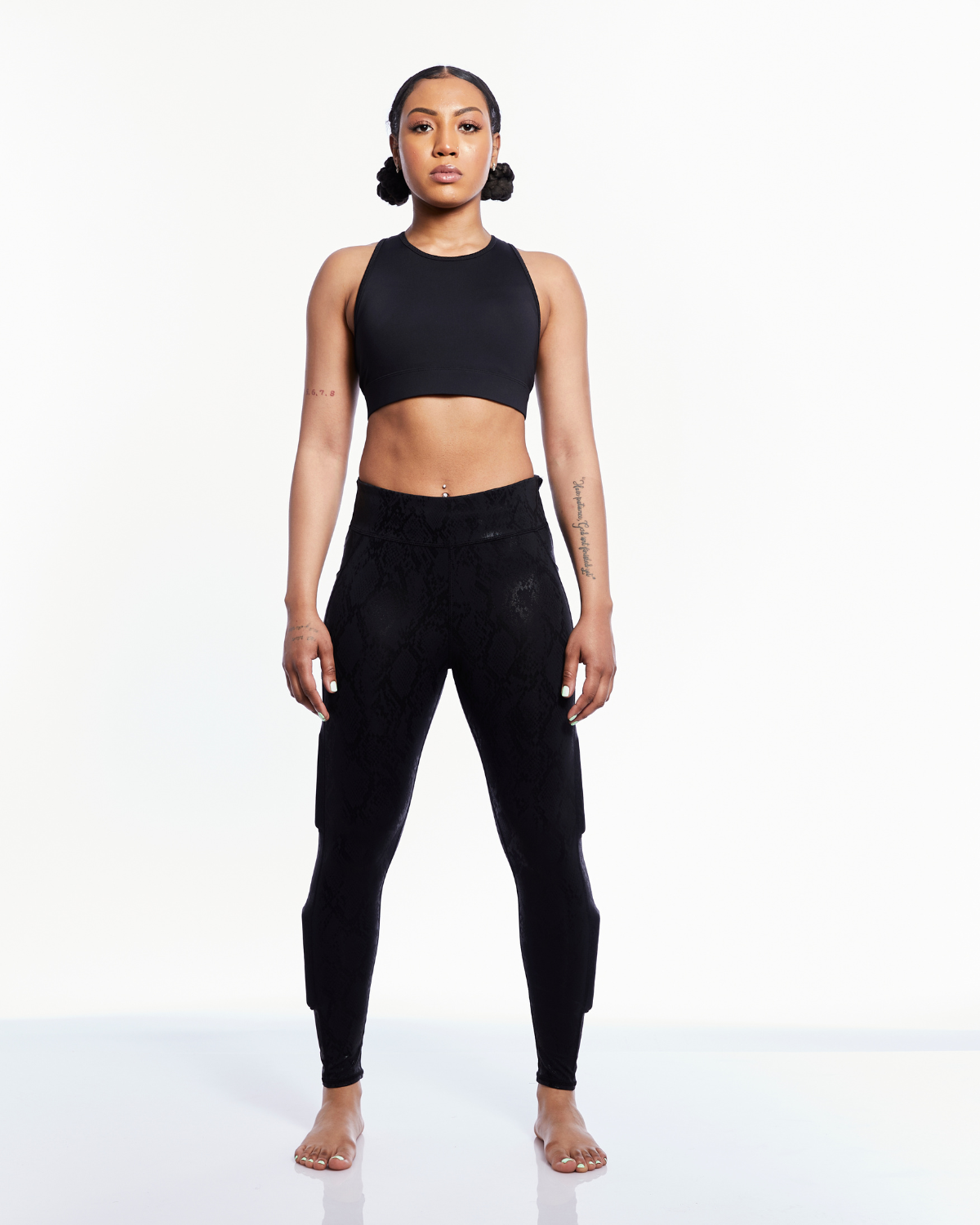
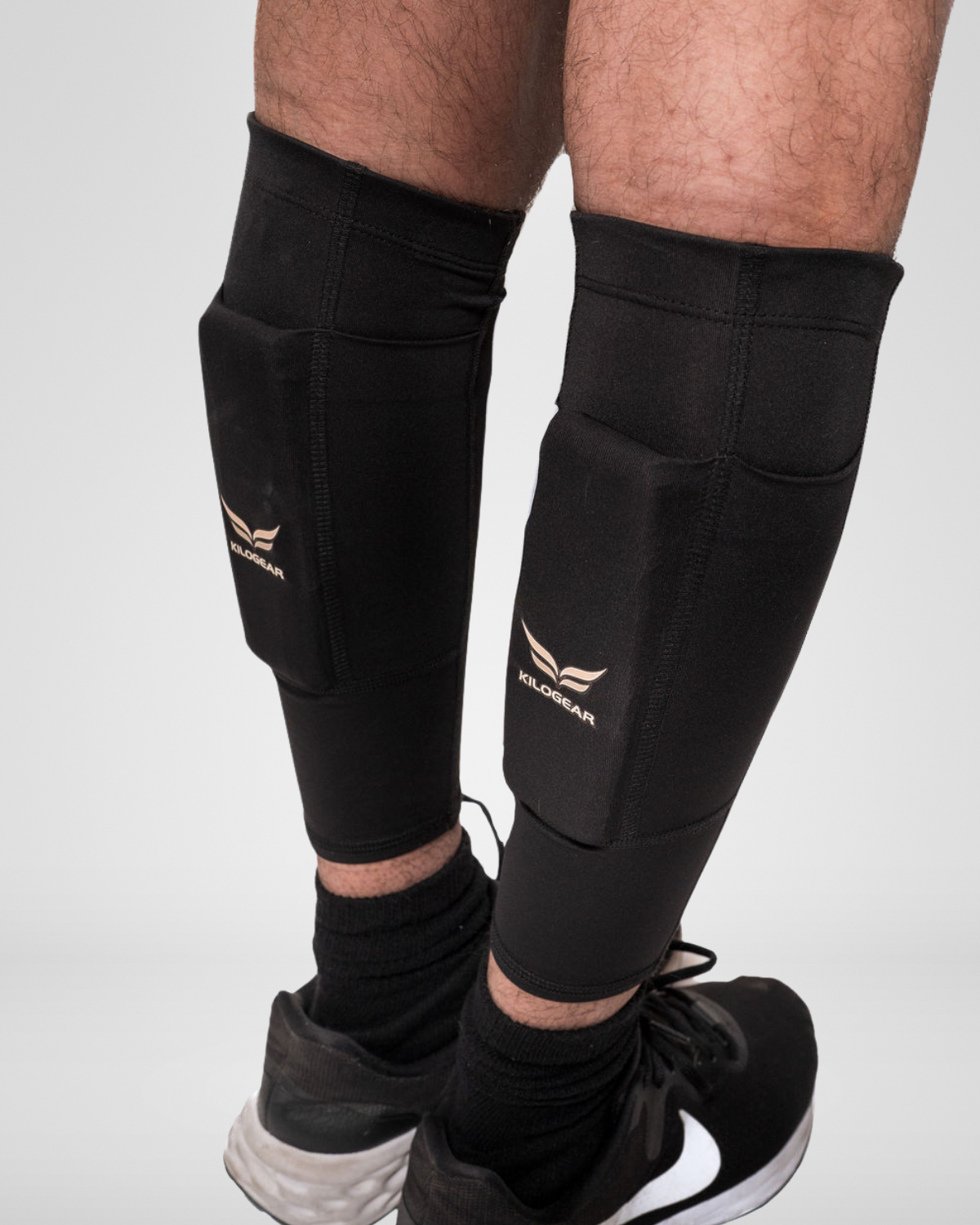
Distributed micro-weighted apparel uses small weights, typically 0.25 to 0.5 pounds each, placed in fixed pockets across compression apparel. The load sits on the muscle bellies (calves, glutes, quads, core, lats), close to the body's center of mass, distributed across multiple muscle groups instead of concentrated at one joint or one column.
Four things make this approach different:
- Distributed load. Instead of 5 pounds on each ankle (the worst place for it), you get 0.25 to 0.5 pounds spread across 16 to 24 pockets on a leggings-and-tank combination. Same total resistance, very different biomechanical signature.
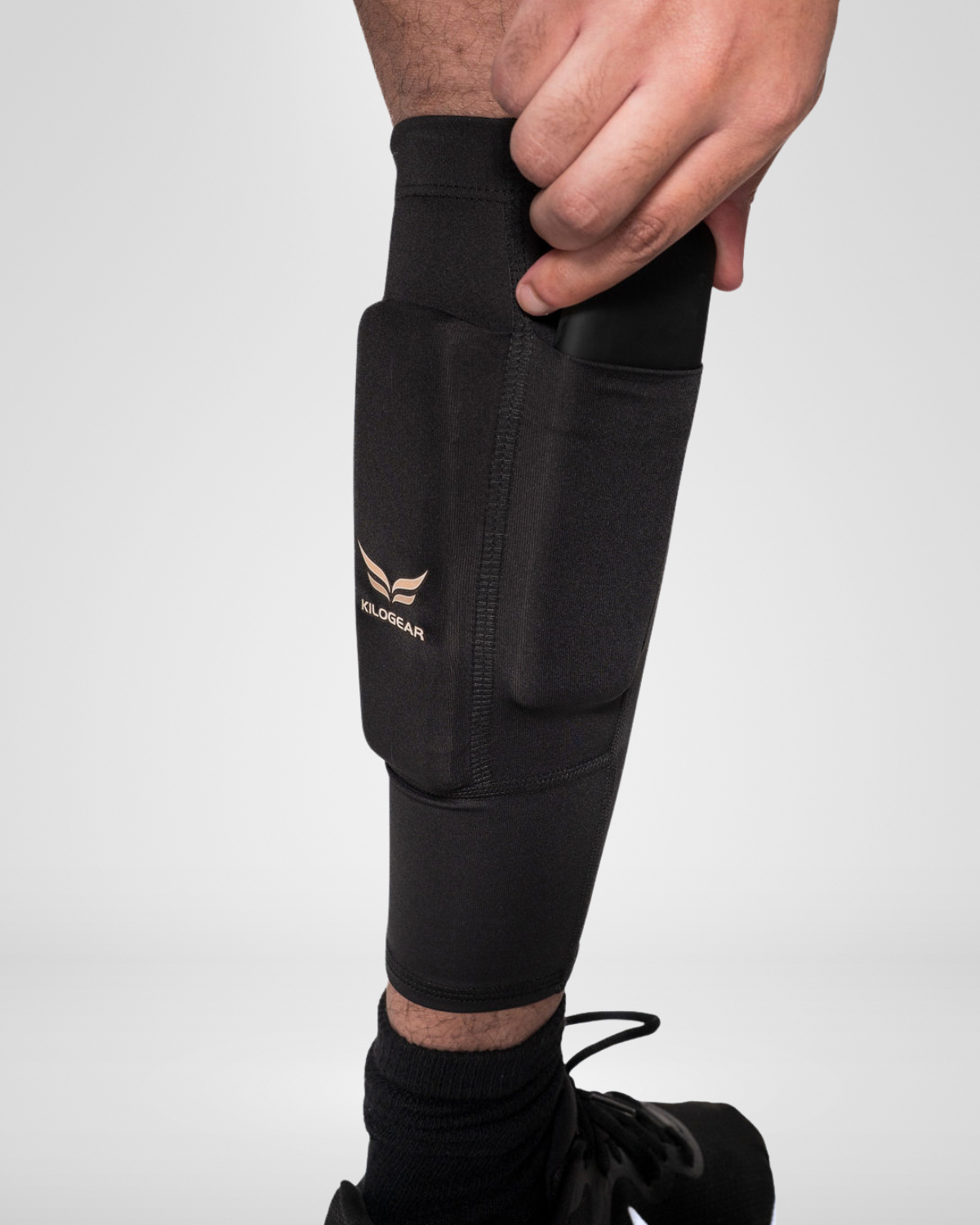
- Modular and transferable. The weights are removable and patented to move between garments. The same set works in your calf sleeves on Monday, your shorts on Wednesday, your tank on Saturday. One weight investment, multiple uses.
- Washable and dryable. Because the weights come out, the apparel goes in the washer and dryer like any other activewear. Traditional weighted vests and ankle weights can't say that.
- They don't fall down. Compression apparel with weights in fixed pockets stays where you put it. Ankle weights slide. Vests ride up. KILOGEAR doesn't.
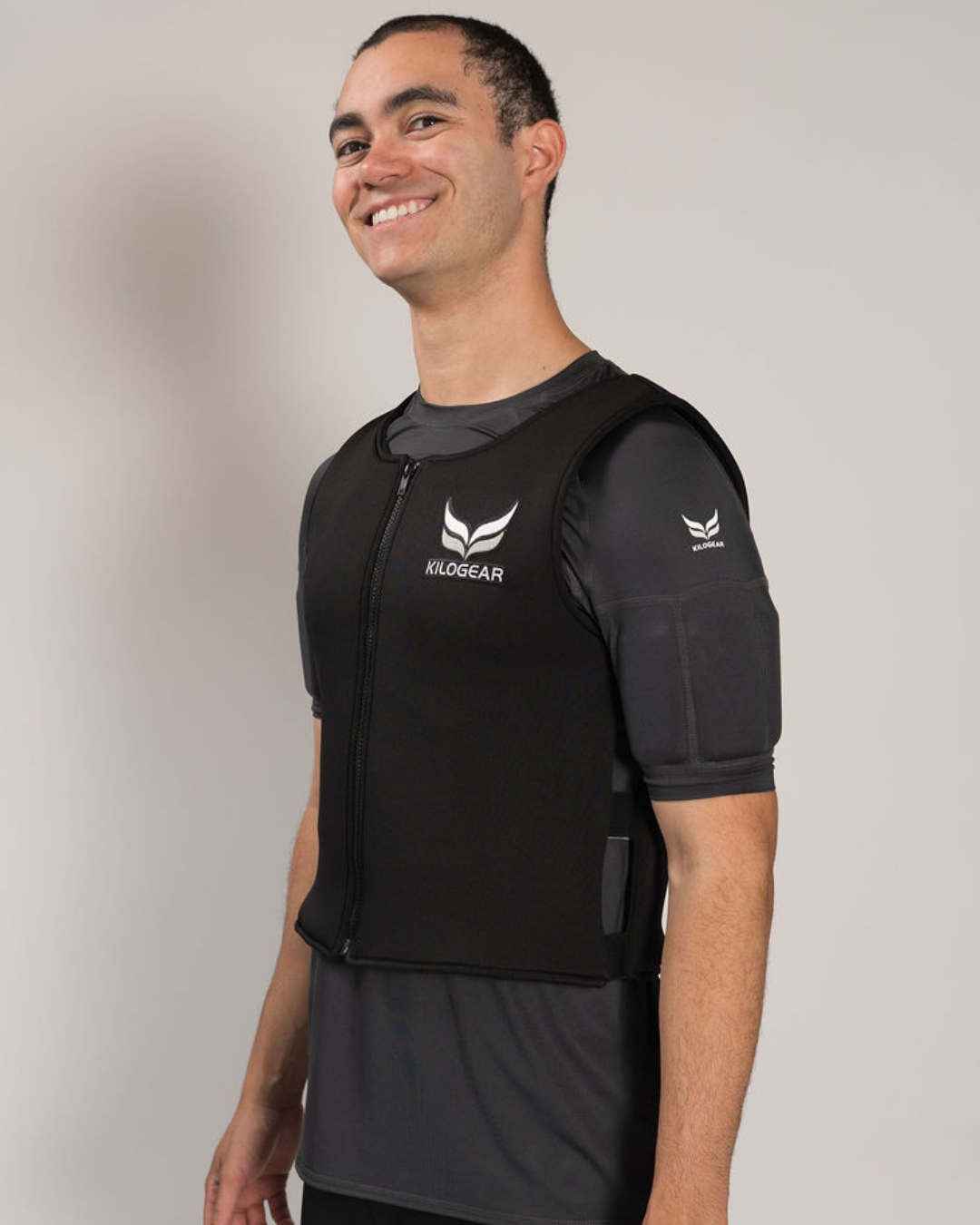
The system is doctor-designed and athlete-validated, which is why it's worn by NBA and NFL athletes for performance training and by Equinox members for ruck-style training with the Precision Vest.

Removable, modular, washable. The weights move between garments.
A walker's guide: what to wear for which walk
Different walks need different setups. This is where most generic "weighted clothing" advice falls apart.
Daily neighborhood walk (30 to 60 minutes, flat to rolling): Start with the KILOGEAR Calf Sleeves loaded light, paired with the AURA Core Tank or the men's Compression Long Sleeve. This puts modest load on calves and core without overloading any single point.
Treadmill incline walk: Calf Sleeves plus the AURA Core Support Legging. Incline already raises metabolic cost significantly. Add modest load, don't add a lot.
Hills, hikes, or longer ruck-style walks: This is where a properly-designed vest earns its place. The PlyoSculpt for women or the Precision Vest used at Equinox distribute load across the torso instead of concentrating it on the spine. Pair with Calf Sleeves only if you're an experienced walker.
Walking meeting, errand walk, dog walk: AURA Core Support Legging or AURA Core Tank under regular clothes. You won't notice the load consciously, but you'll feel it in your accumulated daily output.
Post-injury return to walking: Skip added load entirely until your physical therapist clears you. We mean it. This is not the time.
How to start safely
Three rules. They sound obvious. Most people break all three.
- Start light. Load one or two pockets per garment for the first week. Your body needs to adapt before you add more.
- Start short. A 15 to 20 minute walk loaded light is the right starting dose. Not your usual hour.
- Listen to your body. Soreness in muscles you wanted to work is fine. Sharp pain in a joint is not. Stop, unload, reassess.
If you have a pre-existing back, knee, hip, or neck condition, talk to your physical therapist before adding any load to walking. This applies to weighted vests, ankle weights, and KILOGEAR equally.

Different walks, different setups. Same modular weight system.
The bottom line
The question "how do I burn more calories walking without walking faster or longer" has a real answer. It's added load. The popular answer (ankle weights) is the wrong tool. The traditional alternative (weighted vests) works better but compresses the spine and won't go in the wash. Distributed micro-weighted apparel is the engineered third option. Same total load. No single point of concentrated stress. Modular, washable, transferable, stays put.
If you walk and you've been wondering whether you can squeeze more out of the same loop, the answer is yes. Just don't strap weights to your ankles to do it.
Start with the KILOGEAR Calf Sleeves and the AURA Core Tank or AURA Core Support Legging for everyday walks. Move up to the PlyoSculpt or Precision Vest when you're ready for more.

FAQ
How many extra calories does weighted apparel actually burn during a walk?
Research on load carriage during walking consistently shows a 10 to 20 percent increase in calorie burn when adding 5 to 15 percent of body weight. For a 150-pound walker burning roughly 300 calories on an hour-long walk, that's an extra 30 to 60 calories per session, not the 200 to 300 percent gains some marketing claims. The effect is modest per walk but adds up significantly over weeks and months of consistent use, especially when combined with the muscle activation benefits of distributed load.
Are ankle weights better than weighted apparel for burning calories while walking?
Ankle weights do increase calorie burn per pound more than torso loads because of the leg-swing energy cost. But they also alter gait, increase joint loading at the knee, and create injury risk that's well-documented in physical therapy literature. The metabolic gain isn't worth the biomechanical cost for most walkers. Distributed load across calves, glutes, and core gives you a similar calorie bump without putting concentrated stress on a single joint. The math looks good for ankle weights on a spreadsheet. It doesn't look good on an MRI.
How heavy should weighted apparel be for walking?
For most walkers, 5 to 10 percent of body weight is a reasonable target once you've adapted. Start lower, around 2 to 3 percent, and progress over weeks. KILOGEAR's modular system makes this easy because you can add or remove weights individually. You're not stuck with whatever load came preset in the garment. For a 150-pound walker, that means starting around 3 to 4 pounds total distributed across the body, with room to grow toward 8 to 12 pounds over a few months of consistent use.
Can I wear weighted apparel all day to burn more calories?
You can, but more is not better. Wearing distributed load for a few hours of walking and standing is fine and is one of KILOGEAR's design intents. The compression apparel was built to wear comfortably under regular clothes. That said, all-day wear isn't a shortcut. Your body adapts to a constant stimulus, so the calorie-burn advantage diminishes if you never take the load off. Use it strategically: on walks, during workouts, during longer days on your feet. Take it off for sleep and recovery.
Is walking with weighted apparel safe for my knees?
For most healthy walkers, distributed load across multiple muscle groups is meaningfully safer for knees than concentrated load at the ankle or weight stacked vertically on the spine. The biomechanical issue with ankle weights is the moment arm they create at the knee with every step. Distributed micro-load doesn't create that same concentrated torque. If you have an existing knee condition, talk to your physical therapist before adding any load. Skip ankle weights entirely. Start with light calf and core loading, monitor how your knees feel, and progress slowly.
How long until I see results from walking with weighted apparel?
Calorie burn results show up immediately, you're burning more starting on walk one. Visible body composition changes depend on your overall caloric balance, not just the walks. Strength and endurance changes typically show up in 4 to 6 weeks of consistent use, 3 to 5 days per week. Bone density changes, which matter especially for women over 40, take longer, generally 6 to 12 months of consistent loaded walking based on the broader weighted vest research literature. Be patient and be consistent.
Can weighted apparel replace going to the gym?
For most people, no, and we'd push back on anyone who tells you otherwise. Walking with distributed load is a legitimate cardiovascular and muscle-engagement workout, but it's not a substitute for progressive resistance training if your goal is significant strength gains. Where weighted apparel shines is making the time you already spend moving (walks, errands, household activity) more metabolically productive. Think of it as a multiplier on movement you're already doing, not a replacement for the gym.
Why is distributed load better than a weighted vest for walking?
Weighted vests concentrate load on the torso, which is significantly better than concentrating it at the ankles, but it still loads the spine vertically and can shift posture, especially as load increases. Distributed micro-weighted apparel spreads the same total load across calves, glutes, core, and arms. The biomechanical signature is closer to a person who is naturally carrying a few extra pounds of muscle. Vests still have a place for ruck-style training and progressive overload (which is why KILOGEAR makes them too). For typical walking, distributed apparel is the more sustainable everyday choice.