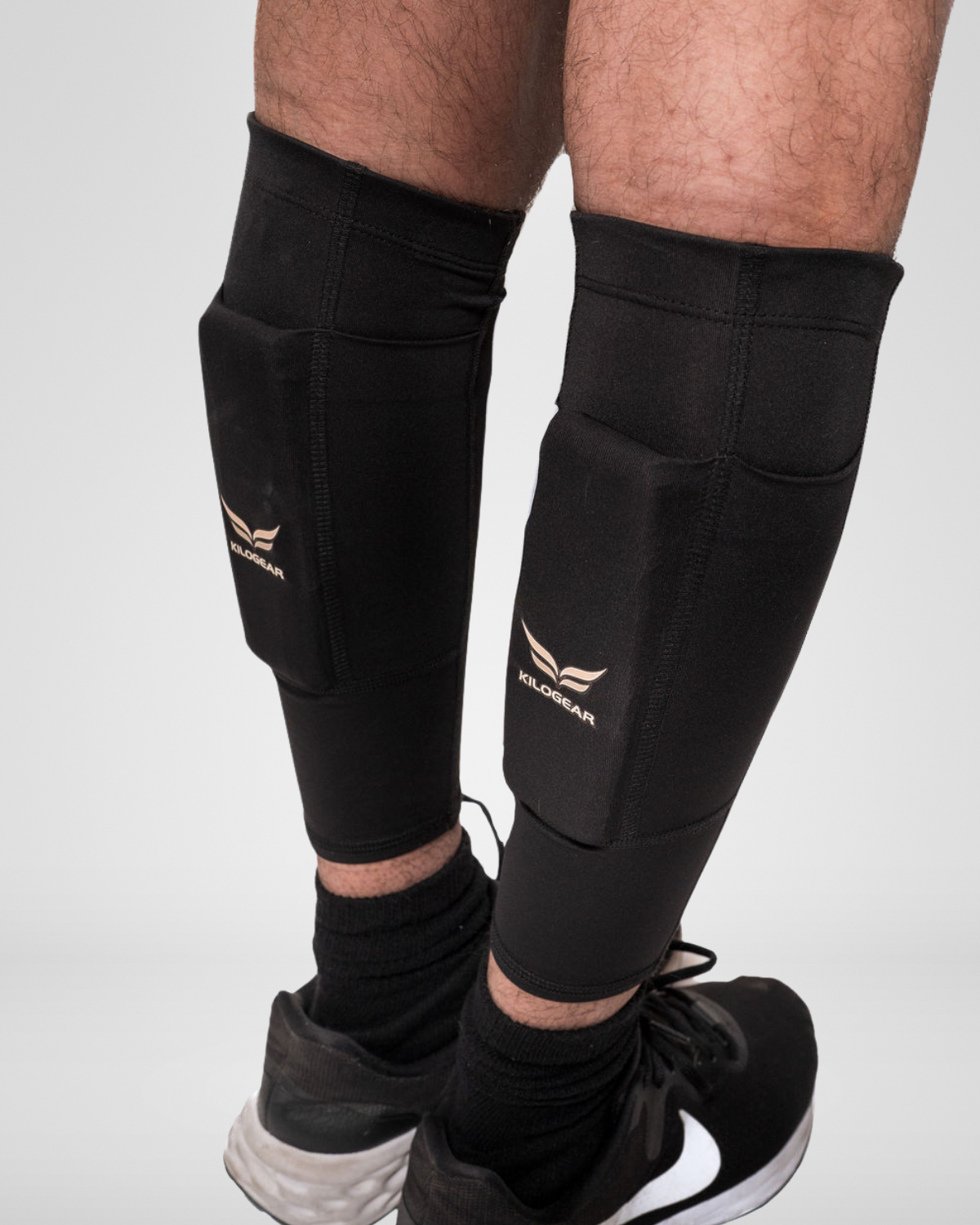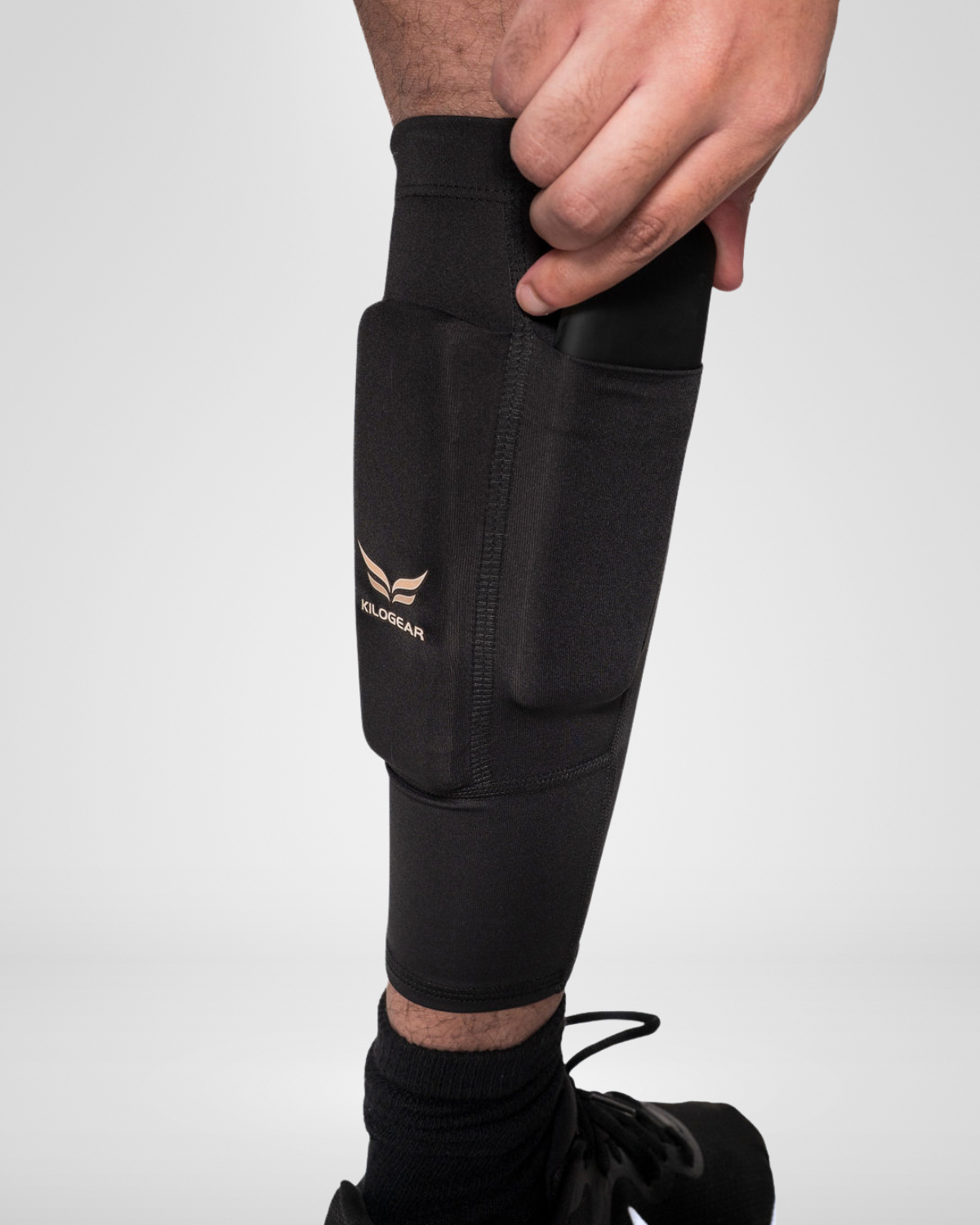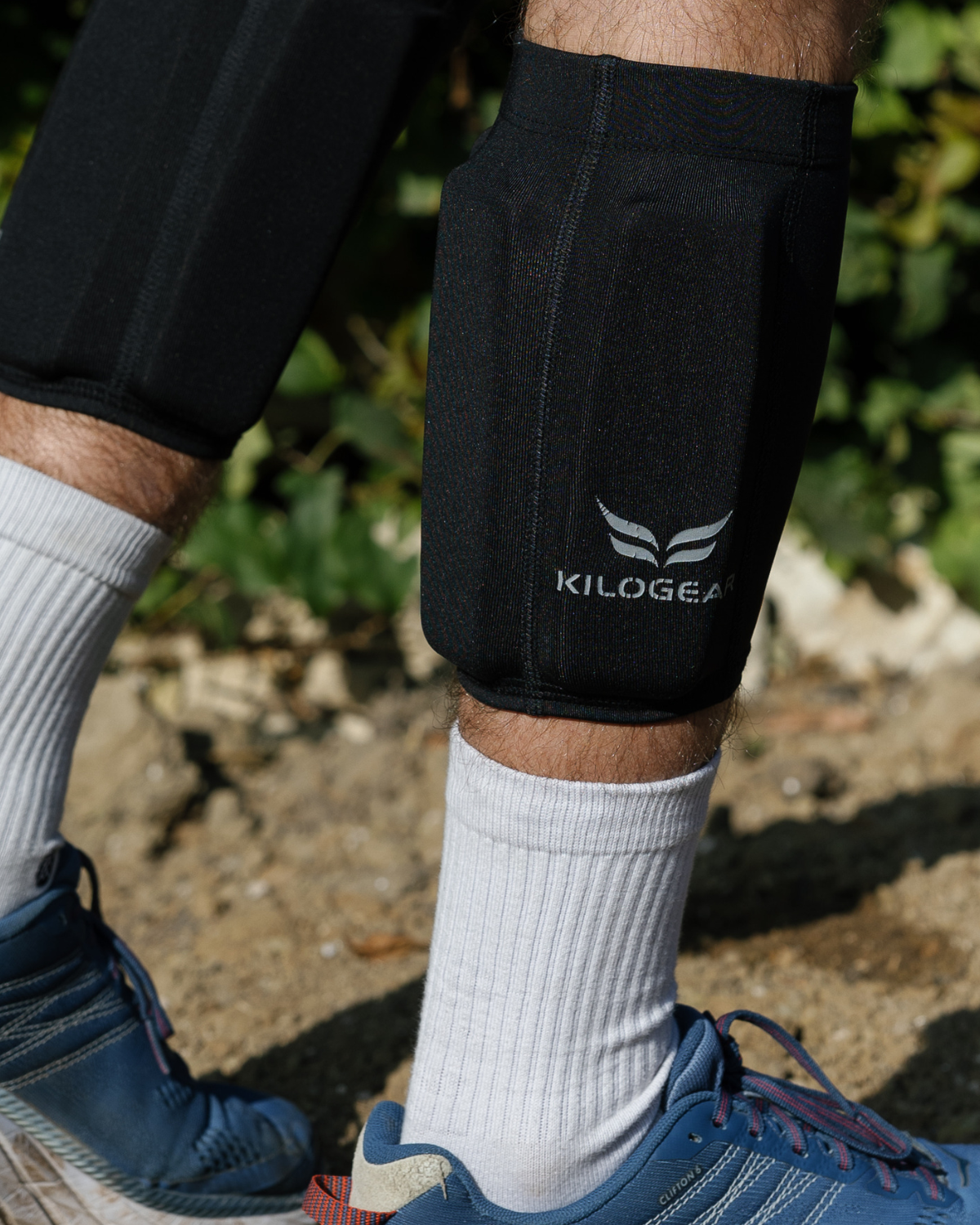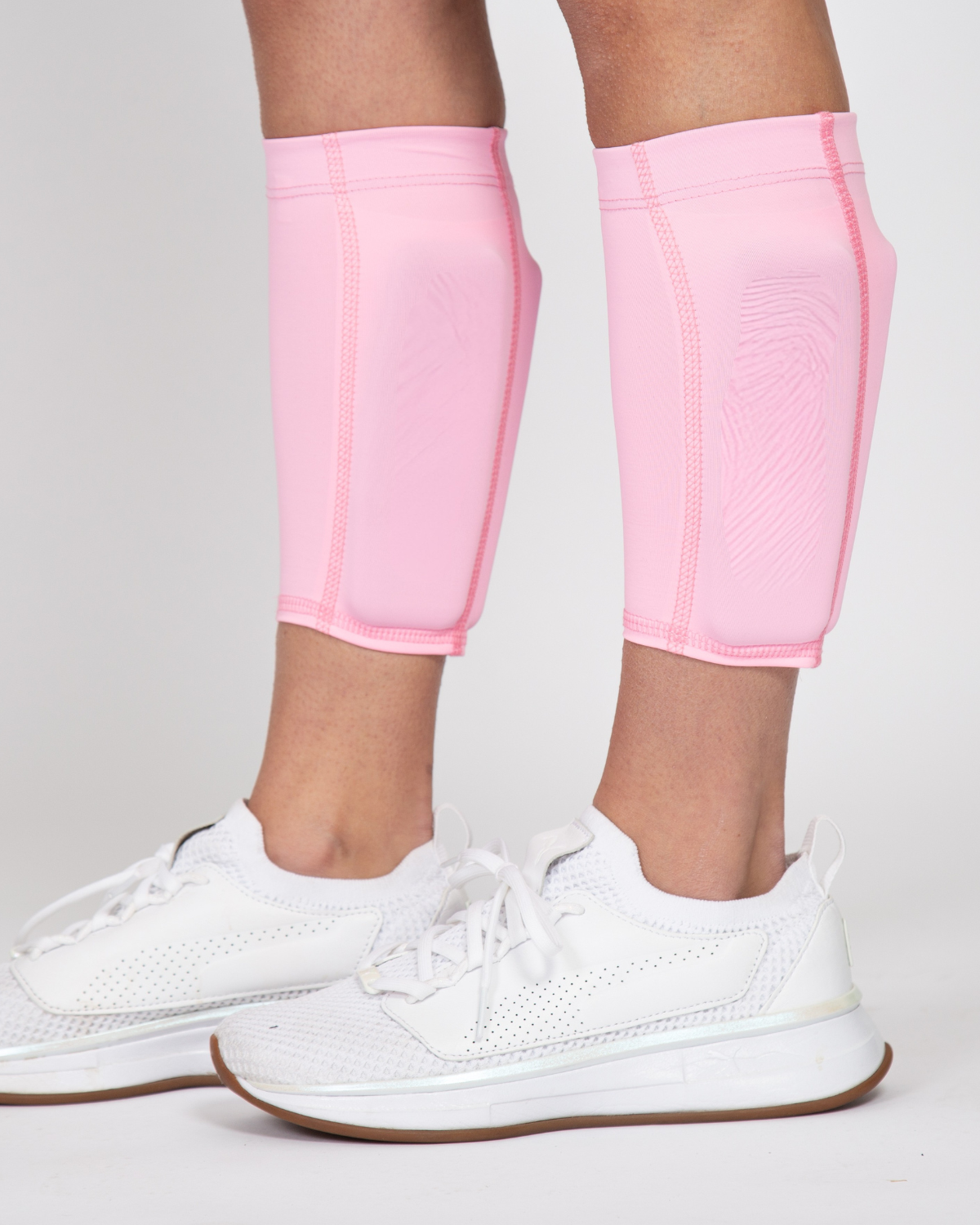



Distributed micro-weighting along the calf and leg muscles, instead of concentrated load at the ankle joint.
Are ankle weights good for walking? Here's the honest answer.
If you're considering strapping ankle weights on for your daily walk, you're asking the right question. The short answer: ankle weights can add resistance, but they're one of the most-warned-against pieces of fitness equipment in clinical practice, and walking is the activity where they cause the most problems.
Harvard Health, WebMD, and most physical therapists agree on the core point: ankle weights are fine for targeted strength exercises, but they're a poor choice for walking. The reason has nothing to do with the weight itself and everything to do with where the weight sits on your body.
There's also a third option that almost no article tells you about, designed specifically to give you the lower-leg resistance you're after without the gait changes and joint strain. We'll get there. But first, let's actually answer the question you came here to ask.
What ankle weights actually do during walking
Ankle weights add resistance to your lower body by concentrating load at the end of your kinetic chain, which is the longest lever in your body. Your hip is the pivot, your foot is the end, and the ankle weight sits at the very tip of that lever.

Ankle weights sit at the very end of the longest lever in your body, which is why they create disproportionate force on every joint above them.
That distance matters. The farther weight sits from your trunk, the more torque it creates on every joint between the load and your center of mass. For a 2-pound ankle weight, the actual force on your knee during the swing phase of walking is several times higher than 2 pounds, because of leverage.
This is the entire reason ankle weights are different from any other type of weighted training gear.
The research on ankle weights and walking
Here's what peer-reviewed research and major health institutions actually say:
Gait changes happen quickly. A study published in the Journal of Physical Therapy Science tested adults walking with ankle weights at 0%, 1%, and 2% of body weight. Even the smallest loading measurably altered walking velocity, step length, cadence, and stride. These aren't theoretical changes. They show up in normal walking the moment you put the weights on.
Tendons and ligaments take the strain. WebMD is direct: "Walking or running with ankle weights can strain the ankle joint and pose risk of tendon or ligament injuries to the knees, hips, and back." This isn't a fringe opinion. It's the standard medical position.
Muscle balance shifts in the wrong direction. Walking should engage your hamstrings (back of thigh) more than your quadriceps (front of thigh) during the gait cycle. Ankle weights flip that. The weight pulls the lower leg, your quads have to work harder to swing the leg forward, and your hamstrings under-fire. Over weeks of regular use, that creates a measurable muscle imbalance that doesn't go away when you take the weights off.
Fall risk increases for older adults. A study of adults 60-70 found that ankle weights at 0.5-1% of body weight may help knee proprioception in clinical settings, but problems increased significantly at 1.5% and above. For older adults walking outside of supervised settings, the risk-reward shifts away from ankle weights.
Karena Wu, a New York-based physical therapist quoted by TODAY, summarizes the clinical view plainly: ankle weights "can cause muscle imbalances, loss of balance and strain muscles and joints due to the increased load farther down the kinetic chain."
So why are ankle weights so popular for walking?
Three reasons:
- They feel productive. Adding any weight makes a walk feel harder, and "harder = better" is intuitive. The problem is that "harder on your joints" isn't the same as "better for your fitness."
- They're cheap and visible. A pair of ankle weights costs $15-25. You can see them. You feel like you're doing something.
- The marketing is everywhere. Ankle weights had a major social media moment in 2020-2023, and the "wear them all day" trend spread fast. The science didn't catch up to the marketing in most people's feeds.
The result: a lot of people are walking with ankle weights right now, and a lot of them are creating small joint problems they won't notice for months or years.
When ankle weights actually do work
Ankle weights aren't useless, they just need to be used in a controlled setting:
- Targeted, non-walking strength exercises. They can be effective when they fit properly and don't rest on the joint doing exercises like leg lifts, donkey kicks, or side-lying hip raises, since you're not bearing weight through the joint dynamically, so the leverage problem matters less.
- Physical therapy under supervision. Some rehab protocols use ankle weights for very specific muscle activation goals, with a clinician adjusting load and form.
- Standing balance work. Used briefly and at light loads to challenge proprioception during static exercises.
But "walking around the neighborhood with ankle weights to burn more calories" isn't on that list. That's the use case the medical community keeps warning against, and it's the most common one.
What to do if you actually want to add resistance to your walk
You came here because you want to make your walks work harder. That's a great instinct. The question is just: what's the smartest tool to do it?
There are three real options:
A weighted vest. Distributes load across your torso near your center of gravity. Doesn't change your gait. The trade-off is bulk, heat, and spinal pressure if you have any back issues. Good for dedicated training walks. Less practical for daily wear.
Walking faster, or walking up hills. Boring answer, but the research backs it. Pace and incline give you bigger calorie-burn gains than light added weight. If you're not maxed out on speed and incline, you're leaving the easiest gains on the table.
Distributed micro-weighted apparel. This is the third option most articles never mention because it's a category that didn't really exist a few years ago. Instead of one heavy load on your torso or two heavy loads on your ankles, the weight is split into very small increments and distributed along multiple muscle groups in compression apparel. Weight sits along the muscle, close to the body, instead of dangling from the joint.
This last option is what we built KILOGEAR around, and it solves the exact problem that makes ankle weights risky for walking.
How KILOGEAR Calf Sleeves replace ankle weights (and why they're better for walking)

KILOGEAR Calf Sleeves distribute weight along the calf muscle itself, eliminating the leverage problem of ankle weights.
If you're specifically interested in lower-leg loading (which is what most people actually want when they reach for ankle weights), KILOGEAR Calf Sleeves are the engineered answer.
Here's the difference, mechanically:
Ankle weights: A 1-2 pound mass strapped at the ankle joint. All the load sits at the very end of your leg's lever. Your knee, hip, and lower back have to actively resist the torque this creates on every step.
KILOGEAR Calf Sleeves: Small distributed weights spread along the calf muscle itself, in a compression sleeve. The load sits ON the muscle that's working, not at the end of the joint. Your gait stays normal. Your hamstrings keep firing the way they should. The leverage problem disappears because there's no leverage.
You get what you actually wanted (added resistance for the muscles in your lower leg during walking) without what you didn't want (joint strain, gait changes, muscle imbalance).
The Calf Sleeves are also wearable in ways ankle weights aren't. Under jeans, under workout pants, on their own with shorts. People wear them on daily walks, on errands, at work. The "all day" trend that ankle weights kicked off actually makes more sense with distributed apparel, because the biomechanics support extended wear in a way ankle weights don't.
And there's a practical advantage that's easy to overlook until you live with both: KILOGEAR is washable and dryable. The weights are removable, so the apparel goes in the laundry like any other piece of activewear. You can't wash an ankle weight (sand or steel shot inside stitched fabric pouches that hold every bit of sweat). You also can't wash most weighted vests (foam, electronics, sewn-in plates). Anyone who's tried to do daily-wear weighted training with traditional gear has run into this fast: it gets gross, and there's no fix.
The removable-weight design also means the system is modular. Pull the weights out of your Calf Sleeves on Monday, drop them into a weighted legging on Tuesday, transfer them into a weighted short for a hike on Saturday. One weight system, multiple garments, multiple outfits. You're not buying a closet full of single-purpose weighted clothing. You're buying apparel that adapts.
Practical, but also: they don't fall down. Ankle weights slide. Wrist weights slip. Vests ride up. KILOGEAR is compression apparel with the weights distributed in fixed positions along the muscle, so they stay exactly where they're supposed to be, every step, every rep, no constant adjustment.
The full distributed-apparel system for walkers
 Weighted leggings provide safe, comfortable and fashionable resistance during walks.
Calf Sleeves are the most direct ankle-weights replacement, but they're one piece of a modular system. The weights themselves are removable, which means a single set of weights can move between your Calf Sleeves, your weighted leggings, your weighted shorts, your skort, or any other KILOGEAR piece you own. You're not stuck with one weighted outfit. You're building a wardrobe where the resistance comes with you across whatever you're wearing that day. Depending on what you're trying to achieve:
For lower-leg loading specifically: KILOGEAR Calf Sleeves. Direct ankle-weights replacement, calf-focused.
For full lower-body loading on walks: AURA Pro Legging (women) or APEX CORE Short (men). Weight distributed across the legs. More comprehensive resistance, more total calorie demand.
For upper-body engagement: Core Arm Bands and Compression Long Sleeve (men). Adds load to arms and shoulders. Useful if you swing your arms intentionally during walks or use trekking poles.
The combo most people start with: Calf Sleeves plus AURA Pro Legging or APEX Pro Short. Lower-body loading distributed across the entire lever, not concentrated at one joint.
Dr. Aaron Willis, DPT (quote pending approval): "When patients ask me about ankle weights for walking, I almost always steer them away. The kinetic chain wasn't designed for weighted distal loading during gait. What we want is added load that respects the body's natural movement patterns. Distributing small loads along the muscle, instead of concentrating them at the joint, is biomechanically superior for walking and everyday movement."
Real benefits of weighted apparel during walking (the ones ankle weights promise but don't deliver safely)

Real benefits without the joint cost. The point of weighted clothing is to make movement work harder, not to make your joints work harder.
Now, with the right tool in mind, here's what adding distributed resistance to your walks actually does:
- Higher calorie burn. Studies show wearing a weighted vest equivalent to 15% of body weight while walking can increase calorie burn by about 12%. Distributed apparel produces a similar metabolic effect at lower total loads, because more muscle groups are loaded simultaneously.
- Increased muscle engagement. When every step adds a fraction of a pound across multiple muscle groups, walking becomes a low-grade strength stimulus instead of pure cardio.
- Improved bone density (for the right population). Harvard Health cites research showing that wearable weights stimulate bone growth and help fight bone loss, particularly in postmenopausal women. Distributed apparel delivers this stimulus without spinal load.
- Better posture and core engagement. Weight close to the body, especially across the torso and limbs, requires constant subtle stabilization. Your core fires more during normal walking.
- Functional carryover. Walking with distributed weight trains the muscles you actually use for daily movement, in the patterns you actually use them.
- Practical wearability. Unlike a vest or ankle weights, distributed apparel can go under regular clothes for errands, at work, or during a normal walk. The training stimulus extends beyond the gym.
- No gait disruption. Your stride stays normal. Your joints stay safe.
- Scalability. Start with one piece (Calf Sleeves), add more as you adapt. The total load grows naturally.
How to start (whatever tool you choose)
Three rules:
- Start light. With distributed apparel, start with the lightest available weight per garment. With ankle weights (if you're using them for non-walking exercises), 1-2 pounds maximum.
- Start short. 10-15 minutes the first session. Build over weeks, not days.
- Listen to your joints. Knee, hip, or back pain after a session is information. Adjust before continuing.
If you have any pre-existing condition (spinal issues, joint replacement, recent injury, balance problems), check with a physical therapist before adding any wearable weight to your routine.
The bottom line
Ankle weights for walking is a question with a clear answer: most experts recommend against it, the research backs them up, and the issue isn't the resistance itself but where the weight sits on your body.
If you want lower-leg resistance during walks (which is the actual goal most people have when they reach for ankle weights), KILOGEAR Calf Sleeves are the engineered upgrade. Distributed weight along the muscle, no joint strain, no gait disruption, wearable under regular clothes.
If you want broader resistance across the lower body, the AURA CORE Legging or APEX CORE TIGHT handle that. If you want full-body loading, layer in a weighted long sleeve or long sleeve shrug.
The point isn't that resistance is bad for walking. It's the opposite. Resistance is one of the best things you can add to a walking routine. The point is that the tool you choose determines whether you're building strength and endurance, or slowly creating joint problems you won't notice until later.
Pick the tool that respects how your body actually moves.
FAQ
Are ankle weights good for walking? Most physical therapists and major health institutions advise against using ankle weights for walking. The concentrated load at the ankle joint creates leverage that increases stress on your knees, hips, and lower back, alters your gait, and shifts muscle activation away from your hamstrings toward your quadriceps. Ankle weights have legitimate uses in targeted strength exercises (leg lifts, Pilates, donkey kicks), but walking isn't one of them.
What can I wear instead of ankle weights for walking? The best alternatives are weighted apparel that distributes load along the muscle rather than concentrating it at the joint. KILOGEAR Calf Sleeves replace ankle weights specifically with calf-focused distributed loading. For broader lower-body resistance, weighted leggings or shorts spread the load across the full leg. A weighted vest is also an option for torso-loaded resistance, though it's less practical for daily wear.
Can you wash KILOGEAR weighted apparel? Yes. The weights are removable, so the apparel goes in the washer and dryer like any other piece of activewear. This is a meaningful difference from traditional ankle weights and weighted vests, which can't be machine washed because the weight is sewn into fabric pouches or built into foam padding. Removable weights also mean the same set of weights can transfer between your Calf Sleeves, leggings, shorts, or skort, giving you one weight system across multiple garments.
How heavy should ankle weights be if I do use them? For non-walking targeted exercises, 1-2 pounds is the typical recommendation, and never more than 3 pounds. For walking specifically, the medical consensus is to skip ankle weights entirely regardless of weight, because the leverage problem exists at any load.
Can I wear ankle weights all day? Wearing ankle weights all day is one of the most common questions and one of the most cautioned-against practices. Extended wear amplifies the gait alteration and joint strain that physical therapists warn about, and the muscle imbalance compounds over time. If you want all-day wearable resistance, distributed micro-weighted apparel is engineered for that use case in a way ankle weights are not.
Do ankle weights help you lose weight while walking? The added calorie burn from light ankle weights is small (typically 5-15%) and doesn't outweigh the joint risk for most people. Walking faster, walking up inclines, or wearing distributed apparel produces equal or greater calorie burn without the same biomechanical cost.
Are ankle weights bad for your knees? Ankle weights create torque on the knee joint during walking because of the leverage between your hip and ankle. Over time, this can contribute to knee pain, tendon strain, and altered movement patterns. People with existing knee issues should avoid them entirely. People without knee issues should be cautious about using them for dynamic activities like walking or running.