

 Quick answer
For walking: A weighted vest is safer than ankle weights, but distributed micro-weighted apparel is better than both. Ankle weights concentrate load at the joint and create gait changes. Vests load the spine. Distributed apparel like KILOGEAR Calf Sleeves and AURA Pro Legging spreads weight across multiple muscle groups, eliminating both problems.
Why people add weight to walking in the first place
Walking is one of the lowest-injury-risk forms of cardio you can do. The downside is that, calorie for calorie, it's slow. A 30-minute walk at 3 mph burns roughly 120 to 168 calories. Compare that to running, cycling, or strength training and you can see why people start looking for ways to make walking work harder.
Adding weight is the obvious move. More resistance means your muscles work harder, your heart rate climbs, and you burn more energy in the same amount of time. The research backs this up. Studies show wearing a weighted vest equivalent to 15% of body weight while walking can improve aerobic fitness and increase calorie burn by about 12%. Walking on a 5-10% incline with a 10% body-weight vest bumps that to roughly 13%.
So the math works. The question is what you put on your body to get there.

What weighted vests actually do (and don't do)
A weighted vest distributes load across your torso, close to your center of gravity. That matters more than most people realize.
When weight sits on your trunk, your spine and skeleton bear the load through their natural alignment. Your gait stays the same. Your hip, knee, and ankle joints absorb force the way they were designed to. According to Harvard Health, weighted vests can be beneficial on a walk because they put pressure on your bones, stimulating the growth of new bone cells and helping fight bone loss. There's strong research on this for postmenopausal women specifically.
In a five-year study, women who wore weighted vests during jumping exercises kept their bone density stable, while women who didn't lost 3 to 4% of the bone density in their hips. A separate six-week study found that postmenopausal women who walked on a treadmill with a weighted vest improved their balance more than those who walked without one.
The trade-offs:
- Traditional vests are known to put pressure on your spine. Harvard's Dr. Beth Frates and other clinicians warn that vests aren't right for people with back, neck, or significant disc issues. Spinal stenosis or disc degeneration can be aggravated by the load.
- Most vests are bulky, hot, restrictive, and not something you wear under regular clothes or out the door for errands.
- They have a weight ceiling. Most experts cap weighted vests at 10% of body weight (15 pounds for a 150-pound person). Go heavier and you're risking the spine and joint problems above.
- Most vests are loud, both literally and visually. They feel like training gear because they are training gear.
- They're hard to clean. Most weighted vests can't go in the washer (foam padding, electronics, sewn-in iron plates), which is a real problem if you're sweating in them regularly.
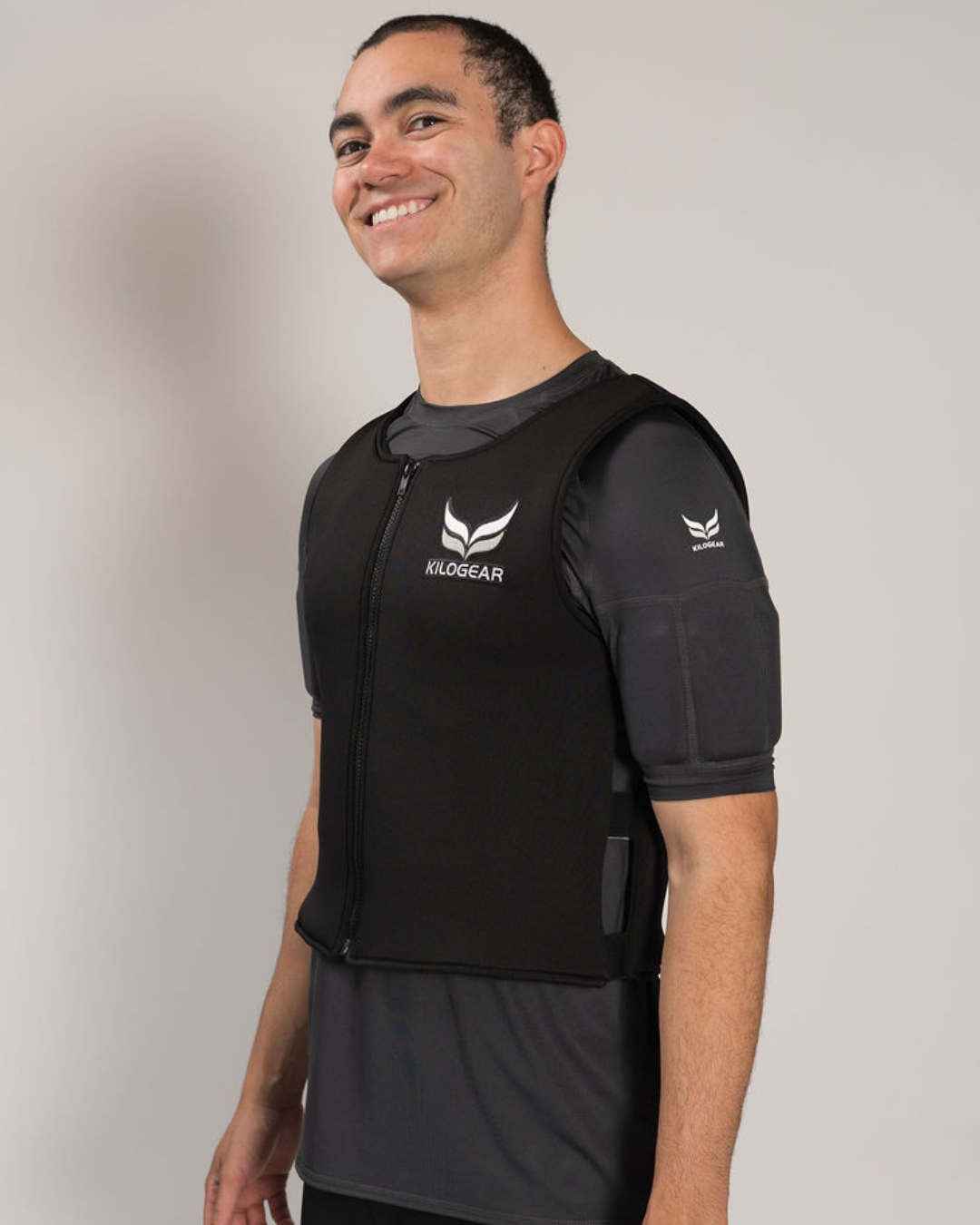
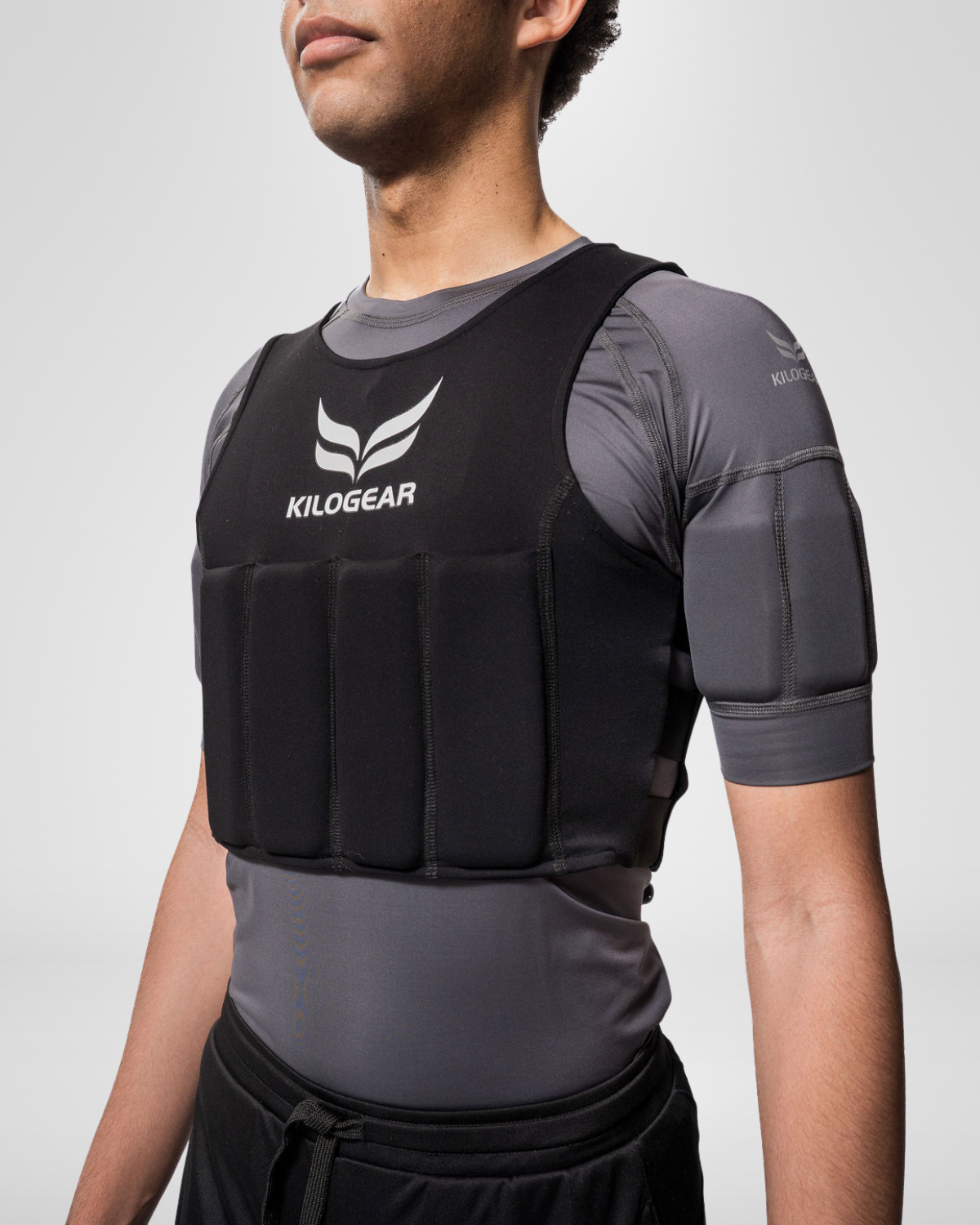
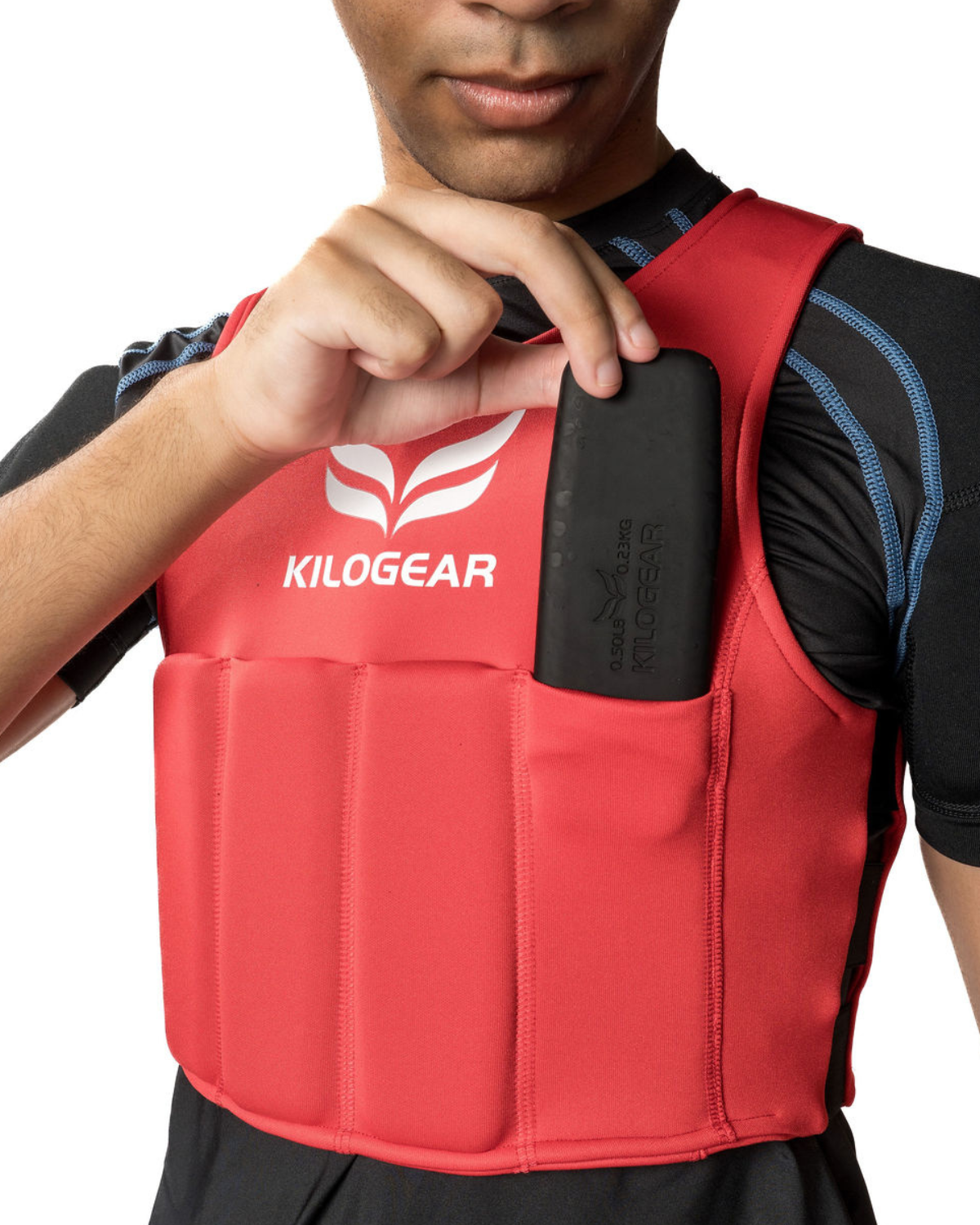
Most of these trade-offs come from how traditional vests are built: heavy plates, rigid panels, bulky construction. The category has evolved. Our PlyoSlide and Precision Vest are engineered for athletes who want vest-style concentrated load without the bulk and heat of plate-based vests, which is why they've become the go-to vest at Equinox for ruck-style training. The weights are also removable, which means the apparel is washable, dryable, and adapts to different load levels as you progress.
Why people like ankle weights, but mainstream medicine keeps warning about them
Ankle weights concentrate load at the farthest point from your center of mass. That's the entire problem.
Here's what the research consistently shows. Walking with ankle weights creates a "traction force" on the knees and hips that your body has to actively counteract. Over time, that does several things:
- It changes your gait. Studies on weight-loaded walking show that even small amounts of ankle weight (1-2% of body weight) measurably alter walking velocity, step length, and stride mechanics.
- It creates muscle imbalances. Ankle weights make your quadriceps (front of thigh) work harder while your hamstrings (back of thigh) underperform. Walking should engage your hamstrings. Ankle weights flip that ratio.
- It strains tendons and ligaments. WebMD is explicit: walking or running with ankle weights can strain the ankle joint and pose risk of tendon or ligament injuries to the knees, hips, and back.
- It increases fall risk in older adults. A study of adults 60-70 found that ankle weights at 0.5-1% of body weight could help knee joint proprioception, but problems increased significantly at 1.5% and above.
Karena Wu, a physical therapist quoted by TODAY, puts it plainly: ankle weights "can cause muscle imbalances, loss of balance and strain muscles and joints due to the increased load farther down the kinetic chain."

Ankle weights aren't entirely without use. They've traditionally been the go-to for targeted lower-body exercises like leg lifts, donkey kicks, side-lying hip raises, and Pilates work, where you're not bearing weight through the joint dynamically. But even here, the same physics problem applies. The weight is concentrated at the end of the longest lever in your body, which means the load on your knee and hip joints during these exercises is higher than it needs to be to get the muscle activation you're after.
This is exactly why we built KILOGEAR Calf Sleeves and Core Arm Bands. They deliver the same targeted strength stimulus for leg lifts, glute work, and Pilates, but with the weight distributed along the muscle rather than dangling from the joint. You get the resistance benefit without the leverage problem. For anyone who's been reaching for ankle weights as a strength-training tool, calf sleeves are the upgrade.
The bigger picture: distance from the body matters
Here's the principle that ties this all together. The farther weight sits from your trunk, the more it disrupts your biomechanics.
A weighted vest sits on your torso, close to your spine. Low disruption.
Wrist weights sit on your forearms. More disruption, more shoulder and elbow strain.
Ankle weights sit at the end of the longest lever in your body. Maximum disruption, maximum joint stress.
This is basic physics. Your skeleton evolved to handle load distributed near your center of mass. The moment you concentrate weight at the extremities, you're asking joints to do work they weren't built for.
"When patients ask me about ankle weights for walking, I almost always steer them away. The kinetic chain wasn't designed for weighted distal loading during gait. What we want is added load that respects the body's natural movement patterns. That's why distributed weighting, where small loads are spread across multiple muscle groups close to the body, is biomechanically superior for walking and everyday movement." - Dr. Aaron Willis, DPT
The KILOGEAR approach: distributed micro-weighted apparel

This is the third option most articles never mention because it's a category that didn't really exist until recently.
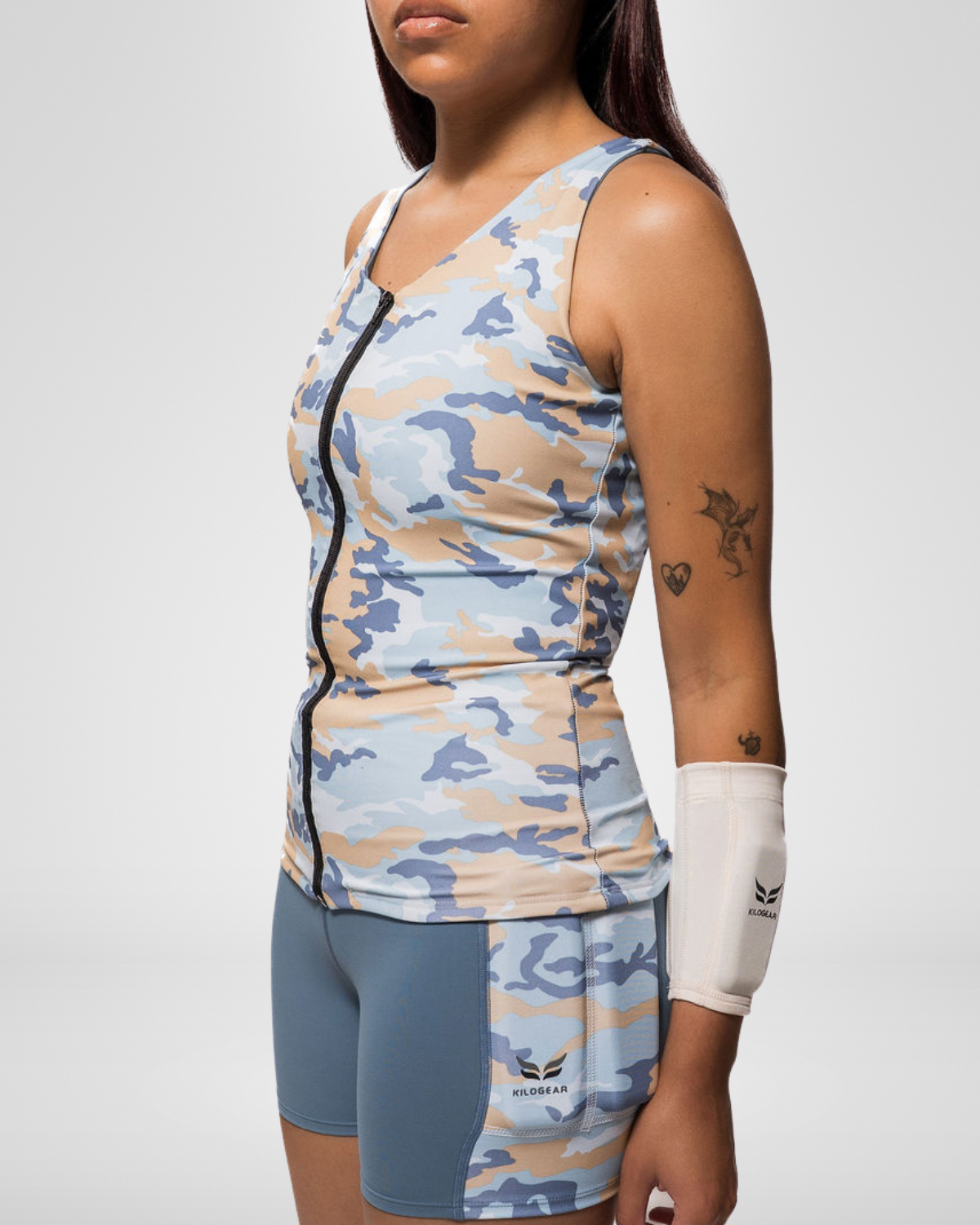
KILOGEAR uses what we call distributed micro-weighting. Instead of one heavy load on your torso or two heavy loads on your ankles, the weight is split into small increments (often as light as a quarter-pound to a pound) and distributed across multiple muscle groups in compression apparel. Calf sleeves, arm bands, leggings, and shorts all carry small amounts of weight, positioned close to the muscle they're loading.
The biomechanical advantage: no single joint is asked to carry concentrated load. Your gait stays normal. Your muscle activation pattern stays balanced. You're not dragging weight at the end of a lever, you're adding subtle resistance to muscles that are already firing.
For walking specifically, this means you can get the calorie-burn and muscle-engagement benefits of added weight without the joint strain of ankle weights or the spinal load of a heavy vest. And because it's apparel, you can wear it under regular clothes or out for a normal walk, errands, or daily activity.
The system is also modular. The weights themselves are removable, which means a single set of weights can move between your calf sleeves, your weighted leggings, your weighted shorts, your skort, or any other KILOGEAR piece you own. Pull them out for laundry day, drop them into a different garment, adjust the load up or down as you progress. You're building a wardrobe where the resistance comes with you across whatever you're wearing, not buying a closet full of single-purpose weighted clothing. And because the weights sit in fixed positions in compression apparel, they don't shift, slide, or fall down the way ankle weights and loose-fitting vests do.
Activity-by-activity guide: which option for which goal

Walking for general fitness and bone density (postmenopausal women, longevity focus): A weighted vest at 5-10% of body weight is well-supported by research. KILOGEAR's PlyoSlide is built specifically for this use case, lower profile than traditional plate vests, designed to move with you. If you have any spine, neck, or balance issues, distributed micro-weighted apparel like KILOGEAR's AURA CORE Legging paired with AURA CORE SHRUG gives you load-bearing benefits without spinal pressure.
Walking for calorie burn: Either a weighted vest or distributed apparel works. For dedicated calorie-burn walks where you want maximum stimulus, the PlyoPerform combined with a weighted legging, short or calf sleeve is the best configuration. For everyday wear that you can keep on through errands and daily activity, distributed apparel adds load without the bulk.
Walking with existing knee or hip pain: Skip ankle weights entirely. A light weighted vest or distributed apparel lets you add stimulus without aggravating the joint.
Walking with back or neck issues: Skip the vest. Distributed micro-weighted apparel is the right call here because it doesn't load the spine.
Targeted strength work (leg lifts, donkey kicks, Pilates): KILOGEAR Calf Sleeves and Core Arm Bands deliver the same muscle activation as ankle weights without concentrating load at the joint. If you're using weighted accessories for non-walking strength work, distributed apparel is the upgrade.
Long-distance walking, hiking, rucking: For rucking and structured weighted hikes, the KILOGEAR Precision Vest is purpose-built. It's the vest Equinox uses for ruck training, designed for the kind of long-duration loaded walking where you want concentrated weight that doesn't shift. For longer daily walks where comfort matters more than maximum load, distributed apparel like any of the weighted tights or leggings handle hours of wear without the heat buildup or shoulder fatigue of a vest.
How to start safely (regardless of what you choose)
Three rules apply across the board:
- Start light. With a vest, start at 5% of body weight. With distributed apparel, start with the lightest available weight per garment. With ankle weights (if you're using them for non-walking exercises), 1-2 pounds max.
- Start short. 10-15 minutes for the first session. Build up over weeks, not days.
- Listen to your joints. Pain is information. Knee, hip, or back pain after a session means the load distribution isn't right for your body. Adjust before continuing.
If you have any pre-existing condition (spinal issues, joint replacement, recent injury, balance problems), check with a physical therapist before adding any wearable weight to your routine.
The bottom line
The "weighted vest vs. ankle weights" debate has a clear answer for walking: vests win, ankle weights lose. But that framing misses the actual point. Both options exist on a spectrum of how much they disrupt your natural movement. Ankle weights disrupt a lot. Vests disrupt some, mostly in the spine. Distributed micro-weighted apparel disrupts the least while still adding meaningful resistance.
If you're a healthy adult walking for fitness and you don't have spinal issues, a weighted vest is a fine choice. If you want the benefits without the bulk, the heat, or the spinal pressure, distributed apparel is what we built. If you've been using ankle weights for your walks, the research is clear enough that it's worth rethinking. Your knees and hips will thank you.
FAQ
Are weighted vests better than ankle weights for walking? Yes. Weighted vests distribute load across your torso near your center of gravity, while ankle weights concentrate load at the end of your kinetic chain, creating gait changes, muscle imbalances, and joint strain. Harvard Health, WebMD, and most physical therapists recommend vests over ankle weights for walking.
What's the best weighted vest for walking? The best weighted vest for walking is one that fits 5-10% of your body weight, sits close to your torso without excessive bulk, and stays put through your gait cycle. KILOGEAR's PlyoPerform is designed specifically for walking, training, and athletic movement. Avoid heavy plate-style vests for walking workouts, they're built for static strength training, not dynamic movement.
How heavy should a weighted vest be for walking? Most experts recommend a vest weighing 5-10% of your body weight. For a 150-pound person, that's 7.5 to 15 pounds. Start at the lower end and progress gradually. Don't exceed 10% if you have any spine or neck concerns.
Are ankle weights bad for your knees? Walking with ankle weights can strain the knee joint by creating an unnatural traction force and shifting muscle activation away from the hamstrings toward the quadriceps. Over time this can contribute to muscle imbalance, joint stress, and altered gait. Ankle weights are better suited for targeted strength exercises like leg lifts, not for walking.
Can I wear weighted clothing instead of a vest? Yes. Distributed micro-weighted apparel like KILOGEAR distributes small amounts of weight across multiple muscle groups close to the body, avoiding both the spinal load of a vest and the joint strain of ankle weights. It's especially useful for people with back issues, longer-duration wear, or daily activity.
How long does it take to see results from walking with added weight? Most studies showing improvements in aerobic fitness, bone density, or balance run from 6 weeks to 5 years. You can expect modest cardiovascular and calorie-burn benefits within a few weeks of consistent use, while bone density and strength gains require months of regular training.